Dimorphandra mollis
Dimorphandra mollis
Description
Dimorphandra mollis is a deciduous tree species belonging to the legume family (Fabaceae). Widely known in its native regions as "fava d'anta", this plant is highly valued for its chemical composition, specifically its high concentration of flavonoids, which are essential for various industrial and medical applications.
The species originates from the South American continent, specifically the Brazilian Cerrado biome. It is well-adapted to tropical climates characterized by distinct wet and dry seasons. The plant has evolved to thrive in soils that are often acidic and nutrient-deficient, making it a resilient species within its native environment.
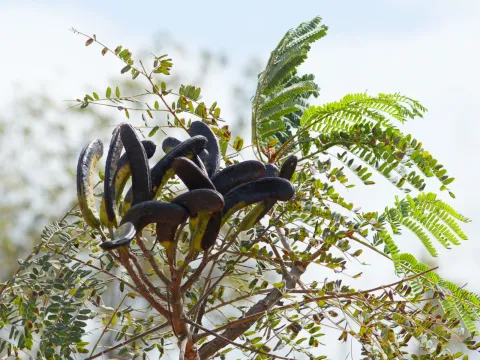
Botanically, Dimorphandra mollis is recognized by its bipinnate leaves covered in fine hairs, providing a soft texture that justifies its specific epithet "mollis". The tree reaches heights of up to 15 meters and produces large, woody pods. These pods serve as the primary source for harvesting active compounds used in commercial production.
Cultivation requirements for this crop focus on providing well-drained, acidic soil and ample exposure to sunlight. While the tree is drought-tolerant once established, early-stage management involves protecting the seedlings from weed competition and ensuring sufficient water access during the initial growth phase in tropical nurseries.
The primary economic use of this plant is the extraction of rutin, a bioflavonoid utilized extensively in the pharmaceutical industry to treat vascular disorders. In addition to its pharmacological value, the tree provides timber that is appreciated for its durability and resistance to pests in local construction practices.
- Rich source of rutin and quercetin.
- High adaptability to tropical savanna conditions.
- Sustainable resource for the pharmaceutical industry.
- Important ecological role as a native forest species.
Photo gallery