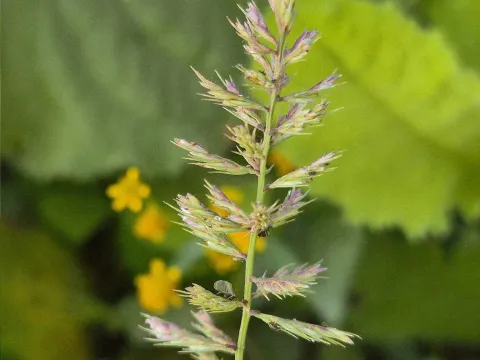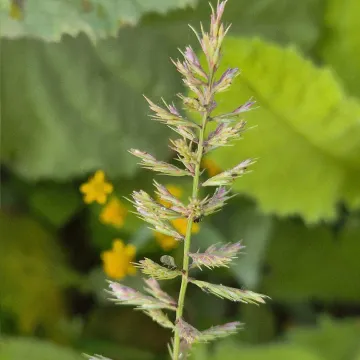
Dinebra retroflexa
Dinebra retroflexa (Vahl) Panz.
Description
Dinebra retroflexa is an annual grass species belonging to the Poaceae family. While often treated as a wild grass, it holds significant potential in agricultural systems within tropical and subtropical climates, where it serves as a robust source of biomass for livestock grazing.
The origin of this species is traced to the tropical regions of Africa and parts of Asia. It thrives in diverse habitats ranging from seasonal wetlands to disturbed agricultural fields. Because of its wide distribution, it is highly adapted to varying rainfall patterns and temperatures typical of these tropical ecosystems.
Botanically, Dinebra retroflexa is characterized by its decumbent or ascending stems that can reach nearly a meter in height. The plant's most identifying feature is its inflorescence, which consists of racemes that are often reflexed (bent backward), giving the plant its distinct appearance. The leaves are narrow and flat, providing a dense cover when the plants grow in colonies.
Regarding cultivation and environmental requirements, the plant prefers warm, humid conditions and fertile soils. It is particularly known for its tolerance to waterlogged environments, frequently appearing as an associate or weed in flooded rice paddies. It demands high levels of solar radiation and does not tolerate frost, making it strictly a warm-season grass.
The primary economic use of this plant is as a source of forage. Livestock, such as cattle and goats, graze on the young, tender foliage, which is palatable and relatively nutritious during the active growing phase. In traditional farming systems, it is harvested as a supplementary feed source, helping to bridge the gap during periods of limited fodder availability.
- Rapid vegetative expansion during rainy seasons.
- Tolerance to temporary flooding and soil saturation.
- Good nutritional profile for small and large ruminants.
- Potential utility in land reclamation and erosion control.
Photo gallery