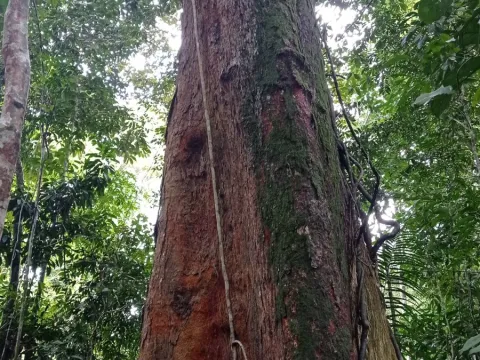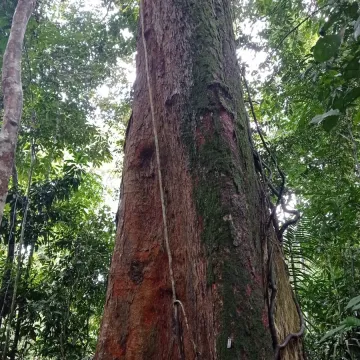
Dinizia excelsa
Dinizia excelsa
Description
Dinizia excelsa, commonly known as Angelim, is a magnificent tropical tree species belonging to the family Fabaceae. Native to the Amazon rainforest, it is recognized as one of the tallest and most structurally significant tree species within its ecosystem, often forming part of the forest canopy.
The native range of Dinizia excelsa primarily covers Brazil and neighboring South American countries. It thrives in lowland tropical rainforests, typically preferring well-drained soils that allow its expansive root system to anchor the tree firmly, enabling it to reach heights that can exceed sixty meters in mature specimens.
Botanically, the species is characterized by its twice-pinnate leaves and small, cluster-forming flowers. Its fruit appears in the form of large, elongated pods containing seeds that play a vital role in the natural regeneration of the species. The tree is known for its relatively fast growth rate compared to other massive tropical hardwoods.
Cultivation requirements for this species are centered around stable, high-temperature tropical climates and consistent rainfall. In silviculture, foresters focus on light management to ensure that young trees receive adequate solar radiation, which is critical for their early growth stages before they reach the higher canopy levels.
- High timber density and durability
- Resistance to natural decay and termite damage
- Crucial habitat provider for tropical wildlife
The wood of Dinizia excelsa is highly valued in construction and heavy-duty carpentry due to its extreme hardness and resistance to biotic degradation. Common pests include various xylophagous insects that target the bark and phloem of younger trees, while sustainable management practices are essential to protect the species from illegal logging and habitat fragmentation.
Photo gallery