Dioscorea antaly
Dioscorea antaly
Description
Dioscorea antaly is a perennial herbaceous climbing plant belonging to the Dioscoreaceae family. This crop is closely related to various edible yams and is highly valued in local agriculture for its large, starch-rich subterranean tubers, which serve as a critical food source in its native tropical growing regions.
The origin and primary cultivation area of Dioscorea antaly is the island of Madagascar. The plant is perfectly adapted to local tropical and subtropical climates, thriving in regions with distinct wet and dry seasons. It has been integrated into traditional farming systems, where it is often grown for household consumption or local markets due to its reliability as a staple crop.
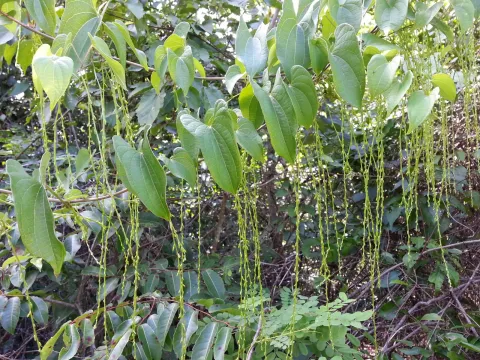
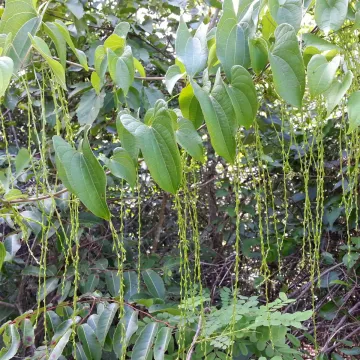
Botanically, the plant is characterized by a vigorous root system that develops one or more fleshy tubers, while the aerial part consists of long, twining vines that require vertical support to develop a healthy leaf canopy. The leaves typically exhibit a heart-shaped or arrowhead form with prominent venation. Propagation is predominantly vegetative, utilizing tuber segments, which ensures the maintenance of desirable plant traits.
Agronomic requirements center on the provision of light, well-draining soils rich in organic matter to prevent tuber decay during high-precipitation periods. The plant is photophilous, requiring significant sunlight for optimal growth. Providing robust trellising is an essential practice, as it maximizes light interception for the foliage, improves air circulation, and facilitates a more efficient harvest of the subterranean tubers at the end of the growing season.
The economic and domestic use of Dioscorea antaly is primarily culinary, as the tubers provide a dense source of carbohydrates after being properly cooked. Additionally, it is investigated for potential applications in medicinal chemistry due to its phytochemical content. Common agricultural challenges include fungal diseases triggered by waterlogging and infestation by root-knot nematodes, which are best managed through proactive crop rotation and precise field drainage strategies.
Photo gallery