Mexican yam
Dioscorea mexicana
Description
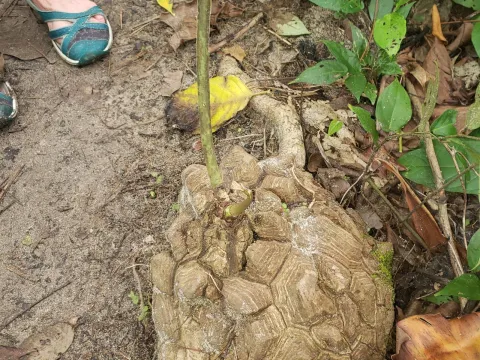
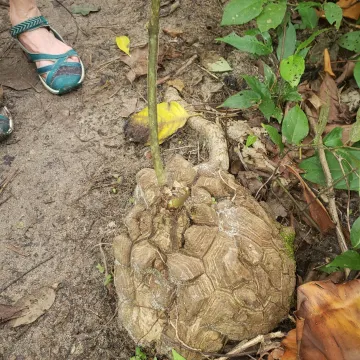
Mexican yam (Dioscorea mexicana) is a fascinating herbaceous perennial vine belonging to the Dioscoreaceae family. It is most recognized for its distinctive, woody caudex, which develops a thick, corky bark with a cracked texture resembling a turtle shell. This adaptation allows the plant to store significant amounts of water, enabling it to thrive in arid tropical environments.
The native distribution of this species is primarily within Mexico and parts of Central America. It typically inhabits tropical dry forests, where the climate supports a cycle of active growth followed by a dormant season. This natural rhythm is crucial for the health of the plant, as it mimics its wild habitat's environmental cues.
Botanically, the plant features heart-shaped leaves and vigorous twining stems that require a trellis or support system to grow properly. While the vine is the fast-growing part of the plant, the caudex is the most valuable and visually striking component, often reaching impressive sizes over several decades of cultivation in controlled environments.
Cultivation requirements focus heavily on soil structure and drainage. A grit-heavy or cactus-style potting mix is essential to prevent root rot. During the growing season, consistent warmth and moderate moisture are necessary, but the soil must be allowed to dry out significantly between waterings. During winter dormancy, the plant requires cool, dry conditions with minimal water.
From a utilitarian perspective, Dioscorea mexicana is historically significant for its high concentration of diosgenin, a precursor used in the pharmaceutical synthesis of steroidal drugs and hormones. Common pests include scale insects and spider mites. Regular monitoring and maintaining appropriate airflow are the best strategies for preventing fungal rot, which remains the primary threat to the caudex's longevity.
Photo gallery