Five-leaf yam
Dioscorea pentaphylla
Description
The five-leaf yam (Dioscorea pentaphylla) is a perennial climbing vine belonging to the Dioscoreaceae family. Widely recognized in tropical horticulture, this plant is cultivated primarily for its edible tubers. It is a vital food crop that has been harvested by indigenous populations in tropical Asia and the Pacific Islands for centuries.
Originating from the tropical regions of Southeast Asia, India, and Northern Australia, this species thrives in humid forest environments. It has a broad distribution across tropical zones, where it is often grown in garden plots or semi-wild conditions. Its adaptability to diverse tropical climates makes it a reliable source of starch for subsistence farming.
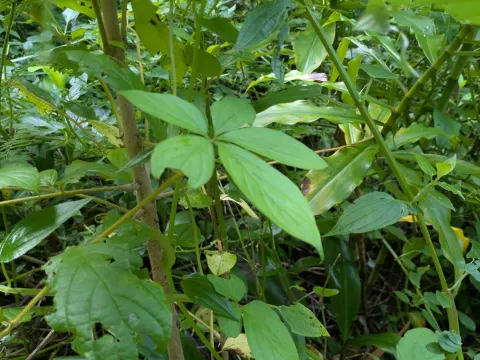
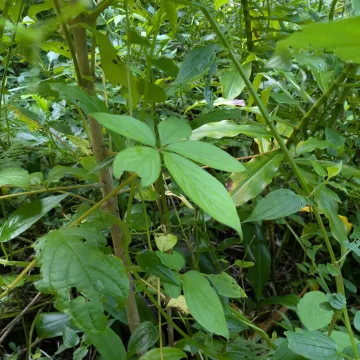
The plant is characterized by its palmately compound leaves, usually divided into five distinct leaflets, which distinguishes it from other yam species. It produces underground tubers that are highly valued for their starch content. As a vine, it requires support, climbing up trees or artificial structures using its twining stems to reach sunlight.
Cultivation requires a tropical climate with high humidity and plenty of rainfall. The ideal soil for Dioscorea pentaphylla is well-drained, loose, and rich in organic matter. Farmers typically plant tuber segments at the beginning of the rainy season to ensure the root system is well-established before the drier periods. Proper site selection and soil preparation are essential for high tuber yields.
- Supports (trellises or poles) are mandatory for optimal growth.
- High levels of organic compost promote larger tuber development.
- Mulching is recommended to maintain constant soil moisture levels.
- Harvesting occurs after the foliage yellows and begins to die back.
Economically, the tubers serve as a staple food source when boiled, roasted, or processed into flour. Beyond its culinary uses, it has traditional applications in herbal medicine within various local cultures. The crop is susceptible to root-knot nematodes and fungal pathogens such as leaf spot and rot, which are often exacerbated by poor drainage and excessive standing water. Effective pest management and crop rotation are necessary to maintain healthy production.
Photo gallery