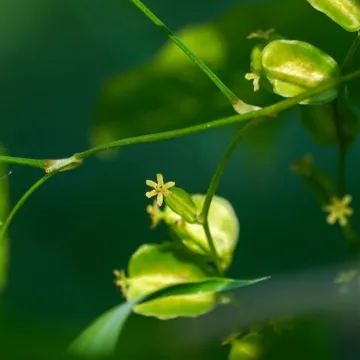

Tokoro yam
Dioscorea tokoro
Description
Tokoro yam (Dioscorea tokoro) is a perennial climbing plant belonging to the Dioscoreaceae family. Unlike some of its culinary relatives, this species is primarily valued for its specialized rhizomes which are rich in steroid saponins, making it a significant crop for pharmaceutical and biochemical research and production.
The species originates from East Asia, encompassing regions in Japan, Korea, and China. It thrives in temperate, humid environments, typically found in forest margins or sloped terrain with dappled sunlight. Its adaptation to these conditions has defined its cultivation practices globally, requiring specific microclimates for optimal tuber development.
Botanically, it features twining stems that require structural support, cordate leaves, and a robust rhizomatous root system. The rhizome serves as the primary storage organ for nutrients. During the flowering phase, it produces small, clustered inflorescences, though commercial propagation relies heavily on rhizome division to maintain genetic consistency and yield quality.
Cultivation requires fertile, loamy, and well-draining soil to prevent tuber rot. The plant prefers partial shade, mimicking its natural habitat. Agricultural management should prioritize vertical trellis systems to encourage healthy foliage growth, alongside steady moisture levels. Organic fertilization is recommended to promote the accumulation of active compounds within the rhizome.
While relatively hardy, the plant is susceptible to common pests like mites and aphids, as well as fungal pathogens in soil that is too compacted or waterlogged. Implementing proper field drainage and practicing crop rotation are the primary defense strategies. Harvesting is typically done after several years of growth to ensure the rhizomes have matured sufficiently for industrial extraction.
Photo gallery