Sticky monkey-flower
Diplacus aurantiacus (Curtis) Jeps.
Description
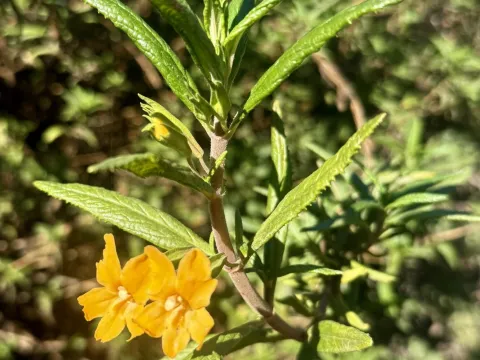
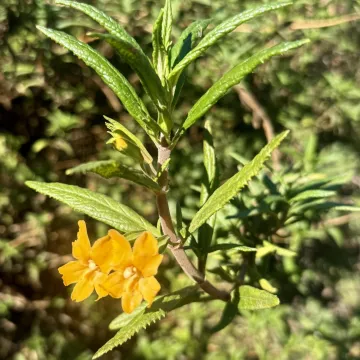
Sticky monkey-flower (Diplacus aurantiacus) is a versatile evergreen semi-shrub belonging to the Phrymaceae family. Known for its sticky foliage and vibrant, tubular blooms, this plant is a staple in Mediterranean-style gardens and arid landscape projects. It is widely recognized for its ability to thrive in poor soils where other ornamental species might struggle.
Native to western North America, particularly California and Oregon, this plant is well-adapted to environments with wet winters and dry, warm summers. While it prefers these specific climate conditions, it has been introduced to many temperate regions globally as a garden specimen. Its hardiness makes it a popular choice for xeriscaping.
Botanically, the plant grows as an upright shrub with lance-shaped, glandular leaves that exude a sticky substance. This adaptation helps reduce water loss during hot seasons. The flowers are highly variable in color, ranging from cream and yellow to deep orange and red, providing a significant nectar source for local pollinating insects.
The cultivation of Diplacus aurantiacus requires a focus on soil drainage. It performs best in gritty, well-drained soil with a neutral to slightly acidic pH. Over-fertilization should be avoided, as it can lead to excessive leafy growth at the expense of floral display. Pruning after the main blooming cycle is essential to prevent the plant from becoming leggy and woody.
In terms of usage, this shrub is primarily used for ornamental purposes in rock gardens, borders, and slope stabilization projects. Because of its drought tolerance, it is increasingly promoted as a water-wise plant in modern urban landscaping. It also serves as an excellent nectar source for butterflies and hummingbirds in its native ecosystem.
- Powdery mildew is the most common disease in humid conditions.
- Aphids and whiteflies can be problematic in greenhouse cultivation.
- Ensure adequate spacing between plants for better air circulation.
- Avoid overhead watering to keep foliage dry and prevent fungal issues.
Photo gallery