Diplacus longiflorus
Diplacus longiflorus
Description
Diplacus longiflorus, commonly known as the southern bush monkeyflower, is an evergreen shrub belonging to the Phrymaceae family. This plant is highly regarded in horticulture for its stunning, tubular flowers and its remarkable ability to thrive in harsh, dry environments where many other ornamental species would struggle.
The plant originates from the arid regions of Southern California and Mexico. In its native habitat, it thrives on open hillsides and canyons. These environmental roots define its fundamental need for excellent drainage and ample sunlight, reflecting its evolutionary adaptation to Mediterranean-like climates with wet winters and dry, hot summers.
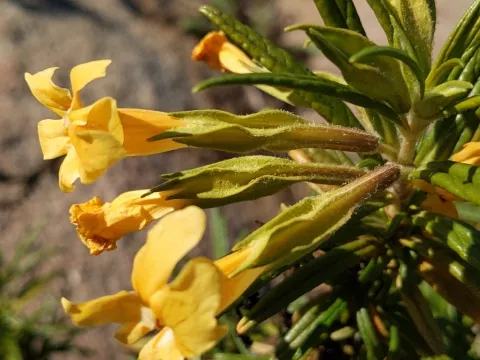
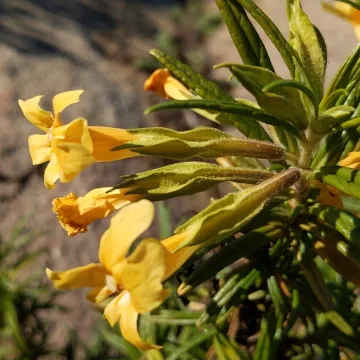
Botanically, this shrub grows to a moderate height of 2 to 3 feet. It features sticky, lance-shaped foliage and elongated tubular blooms. The flower color is quite diverse within the species, ranging from cream and pale yellow to vibrant orange and deep apricot. These flowers provide a significant nectar source for local pollinators.
Agricultural and gardening success with this plant depends on replicating its natural rocky soil conditions. It is essential to use a gritty, well-draining soil mix if planting in containers or amended landscape beds. Over-watering is the primary cause of failure, as the plant is highly susceptible to root rot in waterlogged or heavy clay soil conditions.
- Thrives in full sun exposure.
- Excellent drought tolerance once established.
- Requires pruning after the flowering season to maintain shape.
- Best suited for USDA hardiness zones 8-10.
The primary use of Diplacus longiflorus is in xeriscaping and sustainable landscape design, where water conservation is a priority. While the plant is generally hardy, gardeners should monitor for common pests such as aphids or spider mites, particularly during periods of extreme heat. Maintaining good air circulation is the best way to prevent fungal pathogens and powdery mildew.
Photo gallery