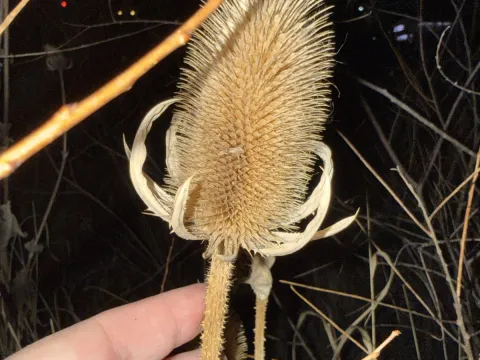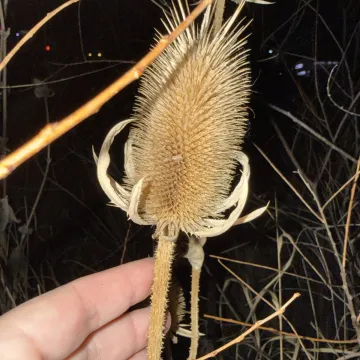
Cutleaf teasel
Dipsacus laciniatus
Description
Cutleaf teasel, or Dipsacus laciniatus, is a biennial herbaceous plant belonging to the Caprifoliaceae family. It is recognized for its unique, rigid, prickly flower heads that make it distinct from other species within the genus due to its specifically lobed leaf structure.
The native range of this plant includes parts of Europe and Asia, where it typically inhabits wetlands, riverbanks, and disturbed open areas. As an introduced species in some regions, it has demonstrated a significant capacity to adapt to diverse environments, ranging from temperate grasslands to riparian zones.
Botanically, the plant develops a large basal rosette in its first year, followed by a tall, flowering stem in the second year. The leaves are deeply cut, giving the plant its specific name, and the inflorescences are characterized by stiff, hook-shaped bracts that protect the flowers and facilitate seed dispersal by attaching to animal fur.
Agricultural cultivation requires well-drained, nutrient-rich soils with consistent moisture availability. While the plant is hardy and competitive, successful management involves monitoring plant density to prevent overgrowth in surrounding areas. It is generally resistant to most pests, though it may occasionally be affected by root rot if drainage is insufficient.
The primary economic and agricultural uses of Cutleaf teasel include its historical role as a natural tool for carding wool and its current value as an ornamental crop in the dried flower industry. Additionally, it serves as a critical late-season nectar source for pollinators, significantly contributing to local biodiversity on farmlands.
- Drought tolerance once established
- High pollinator attraction potential
- Structural utility in landscape design
- Low input requirement for soil fertilization
Photo gallery