Fuller's teasel
Dipsacus sativus
Description
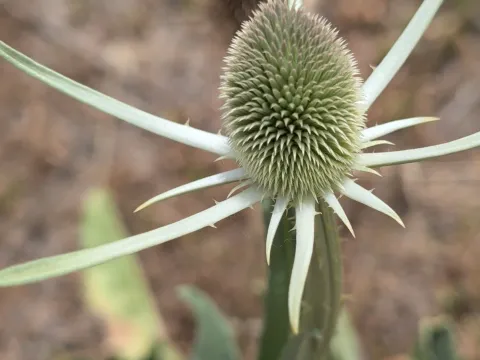
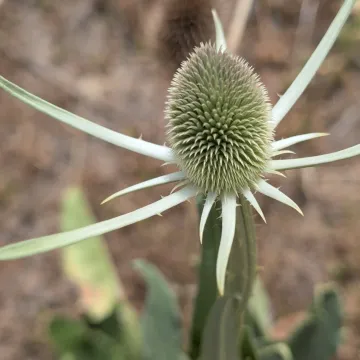
Fuller's teasel (Dipsacus sativus) is a biennial plant belonging to the Caprifoliaceae family, historically cultivated for its specialized flower heads. In its first year, the plant develops a rosette of leaves, while in the second year, it produces a tall, prickly stem topped with large, cone-shaped inflorescences. The bracts of these heads are stiff and hooked, which is the key feature that defined the plant's economic value.
The plant originates from the Mediterranean region, having been introduced across Europe and other parts of the world centuries ago. While mechanical alternatives have replaced teasels in most modern textile processes, Dipsacus sativus remains significant in traditional textile production, particularly for raising the nap on high-quality woolens and felt, as it provides a superior finish compared to synthetic brushes.
Cultivation requires deep, fertile, and well-drained loamy soils. The plant thrives in temperate climates with full sun exposure and is relatively sensitive to excessive moisture during the winter months, which can lead to crown rot. Standard agricultural practices include autumn soil preparation, precision seeding in spring, and rigorous weed management during the first year of the rosette stage.
Beyond the textile industry, the plant is valued for its ornamental properties in dried flower arrangements and as an excellent melliferous plant for apiaries. Its ecological value is high, as the deep flowers provide a consistent nectar source for various bee species and butterflies. It is also sometimes planted in wildlife-friendly gardens to provide habitat and seeds for birds during the winter.
The crop is susceptible to several fungal diseases, particularly powdery mildew and root rot, especially in stagnant or poorly drained fields. Pests such as aphids and spider mites can infest the leaves, occasionally requiring intervention. To maintain crop health, it is essential to monitor fields regularly, practice crop rotation, and ensure optimal spacing between plants to promote airflow and reduce humidity around the base of the plant.
Photo gallery