
Rough-bristled teasel
Dipsacus strigosus
Description
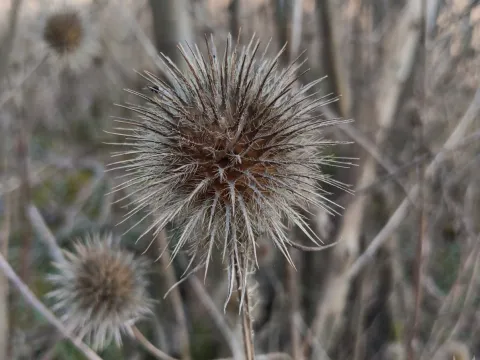
Rough-bristled teasel (Latin: Dipsacus strigosus) is a biennial herbaceous plant belonging to the Caprifoliaceae family. Recognized for its structural height, which can reach up to two meters, this plant features a stout, ribbed stem covered with sharp prickles. These spines serve as an evolutionary defense mechanism, making the plant physically challenging for many herbivores to graze.
The native habitat of Dipsacus strigosus encompasses regions of Central and Eastern Europe and parts of Asia. It thrives in temperate climates, showing a preference for damp, fertile soils. Commonly found near riverbanks, meadows, and forest edges, it is adaptable to various agricultural environments where soil moisture can be consistently maintained throughout the growing season.
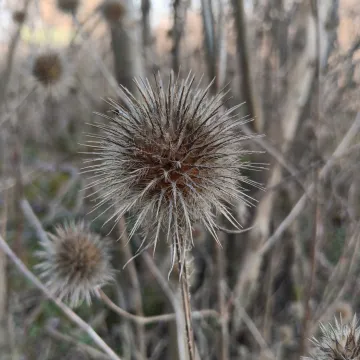
Botanically, the plant develops as a rosette of basal leaves in its first year, followed by the development of an elongated, flowering stalk in its second year. The inflorescences are dense, egg-shaped heads composed of numerous small florets protected by rigid, spine-like bracts. This unique architecture is what distinguishes it from other species in the genus and provides its characteristic aesthetic and technical utility.
Regarding agrotechnology, the crop requires deep, well-drained loamy soils with good organic matter content. Seeds are typically sown in early spring or autumn to establish a strong root system. While the plant is hardy, it requires protection from excessive stagnant water in winter. Weeding is critical during the initial establishment phase, as the plant is relatively slow to grow from seed, making it susceptible to competition from faster-growing weeds.
Economically, the rough-bristled teasel is highly valued in the dried flower market and floral arrangement industry for its architectural structure and durability. Historically, teasels were utilized in the textile industry for raising the nap on fabrics, a process known as fulling. Today, it is also gaining interest in sustainable farming as a pollinator-friendly plant, as its nectar-rich flowers attract a wide array of beneficial insects to the ecosystem.
- High ecological value for supporting local bee populations.
- Resilience against common agricultural pathogens and pests.
- Low input requirement once the crop is established.
Photo gallery