Dipteris conjugata
Dipteris conjugata
Description
Dipteris conjugata is a distinct species of fern belonging to the Dipteridaceae family. Known for its evolutionary significance, this fern is often classified as a living fossil, retaining morphological traits that date back to ancient geological periods.
The plant originates from the tropical regions of Asia and the Pacific Islands. It typically inhabits open areas, including volcanic slopes, reclaimed forest land, and sandy soils. Its distribution is closely linked to its ability to colonize nutrient-poor substrates where other vegetation fails to establish.
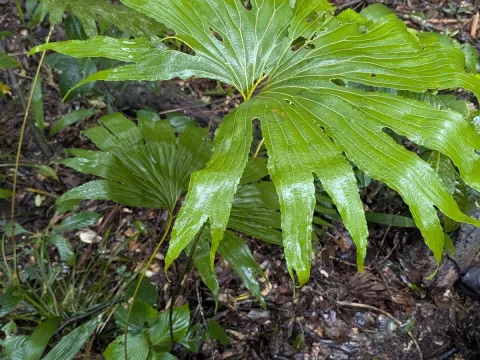
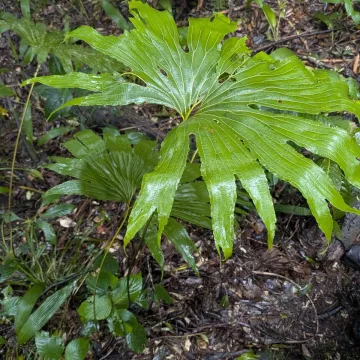
Botanically, the fern is characterized by its large, fan-shaped fronds that bifurcate into two symmetric segments. The plant develops a robust, creeping rhizome covered in fine, hair-like scales, which allows it to spread effectively across diverse terrains and anchor firmly in loose or rocky ground.
In terms of cultivation, Dipteris conjugata requires conditions that mimic its native tropical habitat. Key agronomic requirements include consistently high air humidity and a well-draining, acidic growing medium. It does not tolerate waterlogging, which makes the choice of substrate texture critical for preventing physiological stress.
While not a major commercial food crop, it holds value in botanical research and specialized landscaping. When grown in controlled environments, the main concerns include proper moisture management to avoid rot and monitoring for pests such as scale insects or spider mites, which can proliferate if the ambient humidity is insufficient.
Photo gallery