Button Orchid
Dischidia nummularia R. Br.
Description
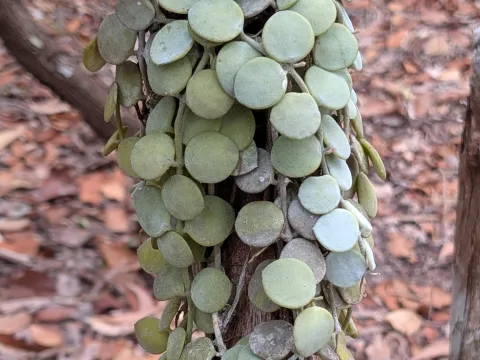
The Button Orchid (Dischidia nummularia R. Br.) is a perennial, evergreen, epiphytic plant belonging to the Apocynaceae family. In its native habitat, it grows primarily as an epiphyte, clinging to the trunks and branches of trees in humid tropical rainforests across Asia and Australia.
Geographically, this species is widespread across regions from India to China, extending into the Malay Archipelago and parts of Northern Australia. As a cultivated species, it has gained popularity in interior landscaping and specialized tropical horticulture due to its unique growth habit and ability to adapt to container life.
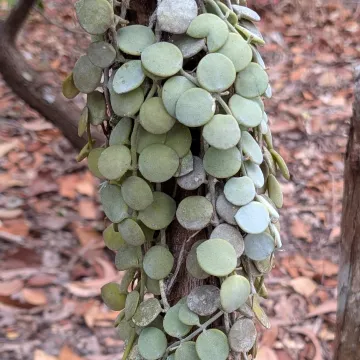
Botanically, the plant is characterized by thin, trailing stems covered with small, fleshy, coin-shaped leaves arranged in pairs. Its adaptive biology includes specialized modified leaves that can act as water storage organs or nesting sites for symbiotic ants, which is a fascinating evolutionary trait common to the genus.
Agricultural requirements for successful cultivation focus on replicating the epiphytic environment. This necessitates the use of a very loose, well-draining substrate such as orchid bark, sphagnum moss, and perlite. The plant thrives in bright, indirect light and requires high atmospheric humidity, though it must be protected from prolonged soil moisture to prevent root decay.
Primary use is found in decorative horticulture, specifically for hanging baskets, vertical wall planters, and tropical terrariums. While generally resilient, the plant is susceptible to pests like mealybugs and spider mites, and cultivators should prioritize good air circulation to mitigate the risk of fungal infections or root rot.
Photo gallery