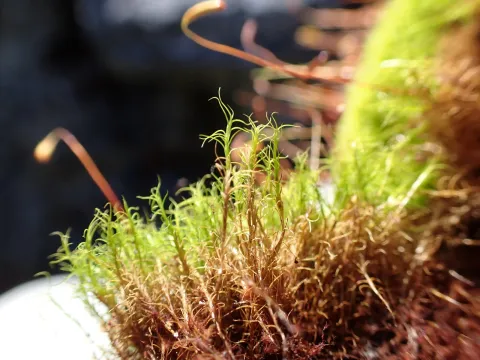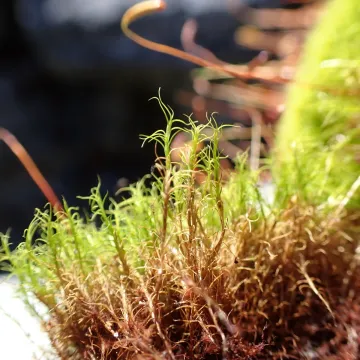
Distichium capillaceum
Distichium capillaceum
Description
Distichium capillaceum is a perennial moss belonging to the Ditrichaceae family. While not an agricultural crop in the traditional sense, this species is a vital component of pioneer vegetation in alpine and arctic regions, playing a key role in ecological stabilization and the early stages of soil development on rocky surfaces.
The species boasts a wide distribution across the Northern Hemisphere, predominantly found in cold, mountainous climates and high-latitude tundra. It naturally thrives on calcareous rocks, limestone cliffs, and steep slopes where moisture collects in fissures and crevices, providing the necessary nutrients and mineral foundation for its growth.
Botanically, it forms dense, tufted mats that are typically yellowish-green in appearance. Its most distinct feature is the distichous (two-ranked) arrangement of its leaves, which provides the genus its name. The leaves are narrowly lanceolate to subulate, tapering from a broad, sheathing base, which helps the plant maintain moisture and adhere to its substrate.
Regarding environmental requirements, this moss is a strict calcicole, meaning it thrives in alkaline soils rich in calcium carbonate. It requires consistent humidity and cool temperatures to remain vigorous. Its life cycle is heavily dictated by the local microclimate of its rocky habitats, where it withstands harsh winds and variable levels of sunlight.
Economically and environmentally, the primary value of Distichium capillaceum lies in its ecological services. It is essential for soil stabilization on unstable rocky terrains and serves as an important bioindicator for air quality and environmental health in protected alpine zones. Potential threats to this species involve the physical degradation of its natural limestone habitats and shifts in mountain water tables.
Photo gallery