Stinkwort
Dittrichia graveolens (L.) Greuter
Description
Stinkwort, botanically identified as Dittrichia graveolens, is an annual flowering plant belonging to the Asteraceae family. It is widely recognized in agriculture as an invasive weed capable of colonizing disturbed environments, roadsides, and agricultural fields with high efficiency, often causing significant disruption to crop production.
Originating from the Mediterranean basin, the species has successfully spread across various continents, including Europe, Western Asia, and Australia. Its expansion is largely attributed to its adaptability to diverse climatic conditions, allowing it to thrive in regions with hot, dry summers where other vegetation might struggle to survive.
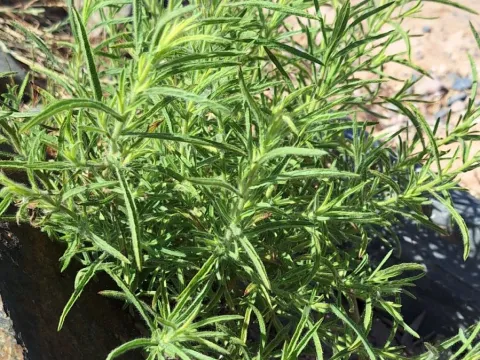
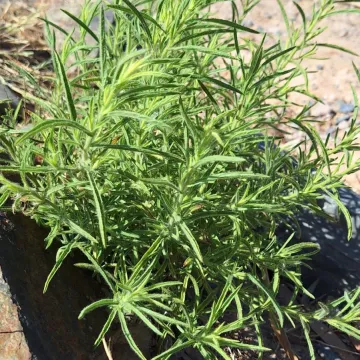
Botanically, this plant is characterized by a glandular-pubescent stem that can grow up to one meter in height and narrow leaves covered in sticky hairs. These hairs emit a strong, pungent odor when touched, which serves as a defense mechanism. During the flowering stage, it produces numerous small yellow flower heads that generate large quantities of wind-dispersed seeds.
Regarding cultivation and environmental needs, Stinkwort requires minimal resources, preferring well-drained soils and high solar radiation. In agricultural settings, it is a formidable competitor for water and nutrients. Control measures typically involve early mechanical removal before the onset of flowering and the use of targeted herbicides to prevent the establishment of the seed bank in the soil.
From an agricultural standpoint, Stinkwort is primarily considered a nuisance. It contains compounds that can cause dermatitis in humans and toxic reactions in livestock if consumed in large quantities. While there are no specific devastating pests for this species, it is frequently suppressed through integrated pest management programs that prioritize preventing seed dispersal across farmland.
- Fast life cycle
- High seed production
- Drought tolerance
- Potential for chemical interference with other plants
Photo gallery