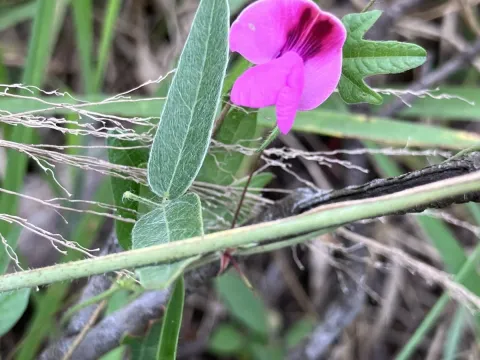

Dolichos trilobus
Dolichos trilobus
Description
Dolichos trilobus is a herbaceous climbing plant belonging to the Fabaceae family. Renowned for its vigorous growth and ability to thrive in tropical and subtropical environments, this legume species has garnered interest as both a forage crop and a soil-enriching cover plant within sustainable agricultural systems.
The plant originates from Southeast Asia and parts of India, where it has historically played a role in traditional agricultural practices. Its current cultivation range has spread to various regions with warm climates, where it is valued for its hardiness and ability to produce substantial biomass in poor soils. Its adaptive nature allows it to establish quickly, making it an efficient choice for land rehabilitation.
Botanically, the plant is characterized by its trifoliate leaves and twining stems that can extend several meters if provided with adequate support or ground cover area. The flowers typically appear in racemes and exhibit the distinct morphological features of Fabaceae members. These flowers are highly attractive to pollinators, which aids in the production of pods filled with protein-rich seeds.
Successful cultivation requires specific climatic and soil conditions. It thrives in regions with warm temperatures and is sensitive to frost, which limits its growing season in temperate zones. The ideal soil profile for this crop consists of well-draining, loamy textures with a neutral to slightly acidic pH. Proper field management involves timely planting after the last frost and ensuring sufficient moisture during the initial establishment phase.
The agricultural and economic utility of the species is diverse, encompassing several key applications:
- Production of forage for livestock, providing high-quality plant protein.
- Use as a green manure to improve soil fertility and nitrogen levels.
- Serving as a cover crop to prevent erosion and suppress weed development.
- Potential use in sustainable land restoration projects to improve soil structure.
As with many leguminous crops, producers must remain vigilant against common pathogens such as fungal root rots and foliar diseases like powdery mildew. Furthermore, insect pests, including aphids and leaf-eating beetles, can affect yields if left unmanaged. Integrated pest management (IPM) strategies, including crop rotation and maintaining adequate field spacing, are highly recommended to ensure crop health and productivity.
Photo gallery