
Dopatrium junceum
Dopatrium junceum
Description
Dopatrium junceum is an annual herbaceous plant belonging to the Plantaginaceae family. In agronomy, this species is recognized primarily as an aquatic weed frequently found in paddy fields and wetland agricultural zones across Southeast and East Asia, where it thrives in saturated soil conditions.
The plant originates from tropical and subtropical regions of Asia, with a natural range extending from India through China to Japan and Australia. It is highly adapted to humid environments, making it a common sight in irrigation channels, marshes, and flooded lowlands, where it can complete its life cycle alongside wetland crops like rice.
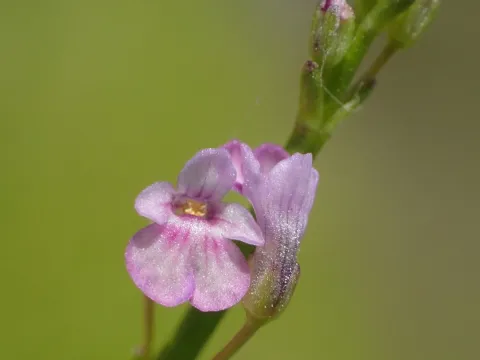
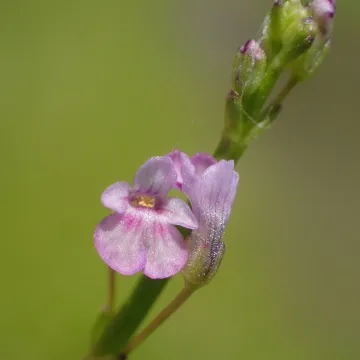
Botanically, Dopatrium junceum features a glabrous, slender, erect stem that typically reaches a height of 10 to 40 centimeters. The leaves are mostly basal, linear or scale-like, and opposite. The flowers are distinctive, characterized by a tubular, bilabiate structure with hues ranging from pink to violet, which bloom prominently above the water line during the growing season.
Regarding cultivation and management requirements, the species favors high moisture levels and nitrogen-rich silty soils. In a farming context, it is treated as a competitor for nutrients and sunlight. Management strategies focus on manipulating the depth of water in rice paddies and employing specific chemical control programs that target its rapid vegetative and reproductive cycles during the early planting stages.
Common issues associated with this species involve its high seed production and ease of dispersal through irrigation water, which necessitates strict water management in rice-growing regions. While it is rarely a target for purposeful cultivation, its presence serves as a biological indicator of water quality and soil saturation levels within managed agricultural ecosystems.
Photo gallery