Leopard's bane
Doronicum orientale Hoffm.
Description
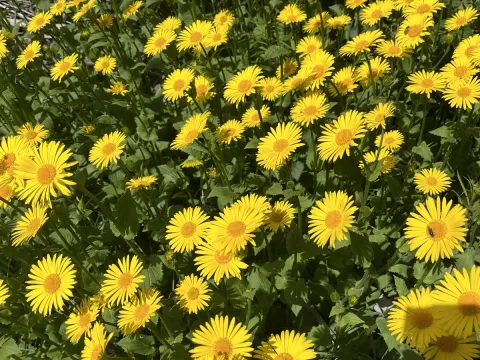
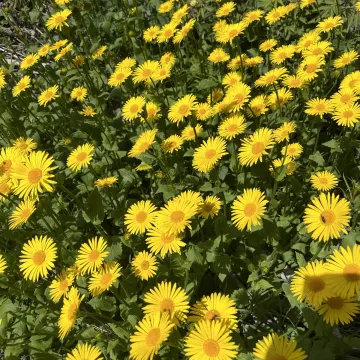
Leopard's bane (Doronicum orientale Hoffm.) is a hardy perennial herb belonging to the Asteraceae family. Known for its vibrant, daisy-like yellow flowers, it is widely cultivated for its ability to provide early spring color to shaded garden beds and woodland landscapes.
The plant originates from the temperate mountain regions of Southern Europe, the Caucasus, and Western Asia. Its natural habitat is characterized by cool, moist, and well-drained soil conditions, which serves as a reliable guide for its cultivation requirements in gardens across various climates.
Botanically, it features a basal rosette of heart-shaped leaves and produces singular or loose clusters of golden-yellow flowers atop stalks reaching heights of 30 to 50 centimeters. The plant spreads via rhizomes, allowing it to form dense clumps that are highly effective for early spring ground coverage.
For optimal growth, leopard's bane requires rich, humus-based soil that retains moisture but provides excellent drainage to prevent root rot. It thrives in partial shade, where the flowers last longer compared to full sun conditions. Regular maintenance involves cutting back the foliage after flowering to encourage a second flush of leaves or tidiness in the garden bed.
In terms of agricultural and horticultural use, this species is primarily utilized for aesthetic purposes in borders and rock gardens. While it is generally robust, it is susceptible to typical garden pests such as aphids and slugs, especially during early development. Diseases like powdery mildew can occur if airflow is poor, necessitating proper spacing and site selection.
Photo gallery