Doryanthes palmeri
Doryanthes palmeri
Description
Doryanthes palmeri, commonly known as the Giant Spear Lily, is a remarkable perennial succulent belonging to the Doryanthaceae family. It is renowned for its massive, sword-shaped leaves that form a wide, architectural rosette. This plant is a standout in any botanical collection due to its impressive scale and dramatic flowering habit.
The plant is native to the coastal regions of eastern Australia, specifically in Queensland and New South Wales. In its natural habitat, it thrives on steep rocky slopes and within moist sclerophyll forests. Its adaptation to these unique environments has allowed it to develop a robust root system capable of navigating crevices and extracting nutrients from thin, well-drained soils.
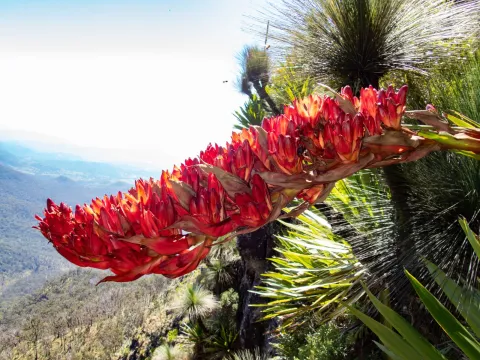
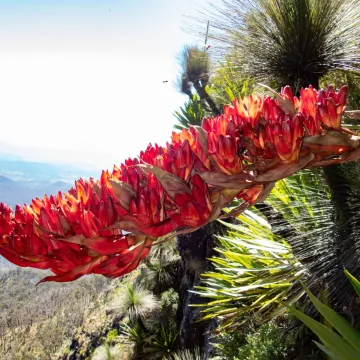
Botanically, the species is defined by its substantial size. The leaves are fibrous and can reach lengths of up to 3 meters. The most striking feature is its inflorescence—a massive, arching flower spike carrying deep red, nectar-rich flowers. This spike can grow significantly tall, making it a focal point in the landscape during the blooming season.
Cultivation requires specific environmental conditions to mimic its natural range. It prefers well-drained, nutrient-rich soil and a position with plenty of sunlight. While it can handle periods of dry weather once established, consistent moisture is beneficial during the growing season. It is not frost-tolerant and requires protection in cooler climates, making it ideal for glasshouses or subtropical regions.
- Ensure excellent soil drainage to prevent root rot.
- Avoid over-fertilization, as it can lead to weak leaf structure.
- Space plants appropriately, as they require significant room to spread.
- Propagation is best achieved through division of offsets or seed.
In terms of economic and practical use, Doryanthes palmeri is primarily an ornamental specimen used in high-end landscaping and botanical gardens. Diseases are relatively rare if the drainage is adequate; however, crown rot can occur in waterlogged conditions. Common pests include mealybugs and scale insects, which should be monitored and treated early to maintain the plant's structural integrity.
Photo gallery