Downy ash
Ferula tingitana L.
Description
Downy ash (Latin: Ferula tingitana L.) is a perennial herbaceous plant belonging to the Apiaceae family. It is recognized for its unique chemical composition, particularly the resinous compounds stored within its root system and stems, which have historically been utilized in various medicinal and industrial applications.
The plant originates from the Mediterranean basin, with natural distributions spanning Northern Africa and parts of Southern Europe. In a controlled agricultural environment, it thrives in regions that mimic its native semi-arid habitat, requiring high levels of solar radiation and well-drained, porous soils to reach optimal maturity and produce high-quality biomass.
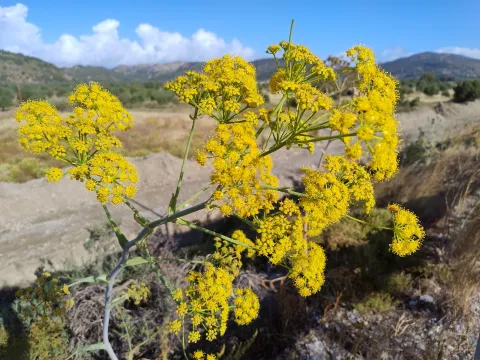
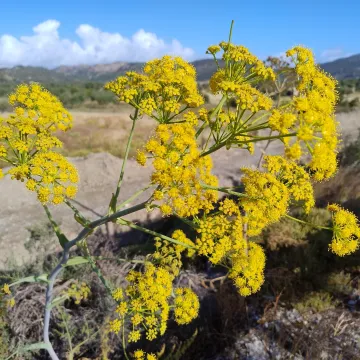
Botanically, Ferula tingitana features a distinct rosette of dissected, feathery leaves and a tall flowering stalk that produces complex umbels of yellow flowers. The plant is characterized by a deep taproot that allows it to survive in environments where groundwater is sparse, making it a resilient crop in warm and arid climates if managed correctly.
Agricultural requirements for Downy ash focus primarily on soil drainage. Excessive moisture is the primary cause of crop failure, as it promotes root rot. The soil should be light, sandy, or loamy with a neutral pH level. Field management includes maintaining clear rows for airflow, regular weeding, and ensuring the plants are spaced appropriately to prevent the spread of localized diseases.
The primary utility of this crop lies in its pharmaceutical properties, specifically the production of oleo-gum resins containing bioactive terpenoids and coumarins. While relatively hardy, the plant is susceptible to specific threats:
- root pathogens that thrive in waterlogged soil;
- soil-borne insects that feed on the taproot;
- foliar fungal infections occurring during periods of high humidity.
Photo gallery