Hoppe's whitlow-grass
Draba hoppeana
Description
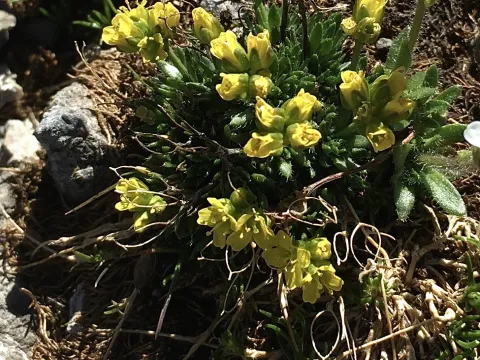
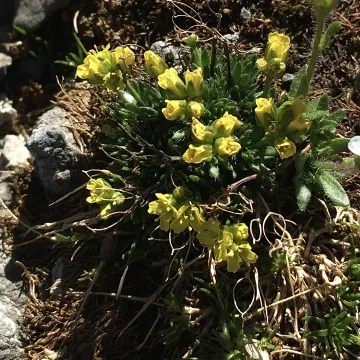
Hoppe's whitlow-grass (Draba hoppeana) is a perennial herbaceous plant belonging to the Brassicaceae (mustard) family. This species is an alpine specialist, naturally adapted to the harsh, nutrient-poor, and high-altitude conditions of the European mountains, where it develops dense, cushion-like growth forms.
The plant originates from the subalpine and alpine belts of the Alps. Its primary habitats include rocky debris, scree slopes, and limestone crevices. In a broader agricultural or horticultural context, it is not grown for mass production but is highly valued by botanists, specialist collectors, and rock garden enthusiasts for its resilience and unique aesthetic appearance.
Botanically, the species is defined by its compact rosettes of linear-lanceolate leaves, often covered in fine hairs (trichomes) which serve as an adaptation to minimize water loss from high-altitude winds. The short flower stalks emerge during the short growing season, producing clusters of yellow to pale-colored flowers. The deep-reaching taproot system is essential for accessing moisture deep within rocky substrates.
Successful cultivation requires strict adherence to alpine conditions: well-draining, stony, or sandy soil with a neutral to alkaline pH is mandatory. Plants thrive in cool, bright environments with excellent air circulation. Overwatering or high humidity around the root crown is the most common cause of failure in cultivation, as these plants are highly sensitive to soil compaction and stagnation.
Economically, the plant is used exclusively in ornamental niche markets, particularly for alpine landscaping. As a member of the Brassicaceae family, it is susceptible to typical pests like flea beetles and fungal diseases such as downy mildew. Maintaining healthy plants requires careful monitoring for pests and the provision of inorganic, well-aerated substrates to prevent pathogen buildup.
Photo gallery