Wood whitlow-grass
Draba nemorosa
Description
Wood whitlow-grass (Draba nemorosa) is an annual herbaceous plant belonging to the Brassicaceae family. In agricultural settings, it is primarily identified as a weed that infests grain fields, pastures, and fallow land, potentially reducing overall crop yield due to its rapid growth in the early season.
This species is native to the temperate regions of the Northern Hemisphere, spanning across Europe, Asia, and North America. Its adaptability allows it to colonize diverse environments, making it a common sight in cultivated fields where it competes effectively with winter crops for essential soil nutrients and water.
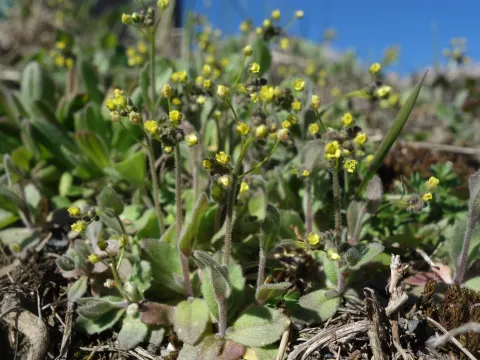
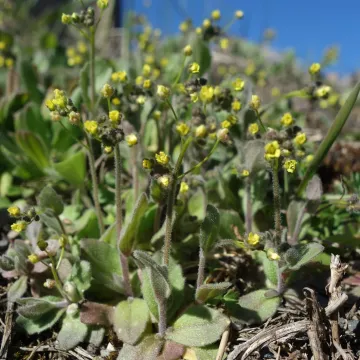
Botanically, it is characterized by a short, branched, or simple stem covered with fine hairs, reaching a height of 5 to 30 cm. The plant forms a basal rosette of lanceolate leaves. Its yellow flowers appear in early spring, eventually producing small silicles containing numerous seeds, which contributes to its high reproductive potential.
The plant thrives on sandy and loamy soils and prefers well-lit, open areas. It does not demand specific nutrient levels, which allows it to thrive in neglected soils. Effective agricultural management focuses on preventing seed production and suppressing germination through mechanical and chemical means, ensuring that the soil bank of seeds is depleted over time.
While the plant serves as a minor early-season nectar source for pollinators, it remains an undesirable weed in modern farming. Key management strategies include:
- Systematic shallow tillage to interrupt the life cycle of the weed.
- Competitive crop selection to shade out the weed seedlings.
- Application of selective post-emergence herbicides.
- Strategic crop rotation to disrupt its establishment.
Photo gallery