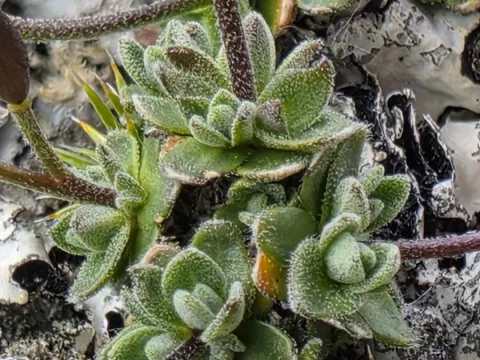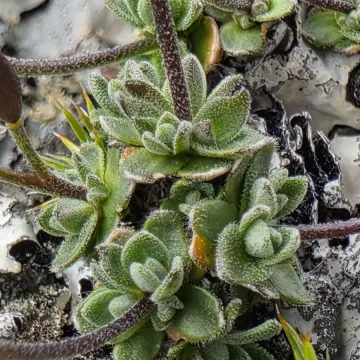
Snow whitlow-grass
Draba nivalis
Description
Snow whitlow-grass (lat. Draba nivalis) is a perennial herbaceous plant belonging to the Brassicaceae family. This species is an iconic representative of arctic and alpine flora, highly specialized for survival in environments characterized by extreme cold and very short growing seasons.
The native range of the plant spans the arctic and subarctic regions across the Northern Hemisphere. It typically thrives in rocky terrain, gravelly slopes, and nutrient-poor arctic soils where it remains isolated from competitive vegetation, allowing it to occupy unique ecological niches.
Botanically, Draba nivalis is defined by its compact rosettes and dense pubescence (tiny star-shaped hairs), which serve as protection against dehydration and intense solar radiation. The plant produces small, white flowers during the brief summer window. Its root system is exceptionally hardy, capable of navigating deep rock crevices to obtain essential moisture and minerals.
Regarding climatic and soil requirements, the plant demands well-drained, slightly acidic or neutral substrate with minimal organic matter. It cannot tolerate waterlogging or high ambient temperatures. Agrotechnical management for this plant is virtually non-existent, as it is a wild species not currently utilized for large-scale agricultural production.
The economic use of this plant is limited to specialized research and its potential utility in rock gardens for enthusiasts of cold-climate flora. Major biological threats include various root rots triggered by poor drainage and susceptibility to common Brassicaceae pests, such as flea beetles, which can cause significant damage to the leaf tissue during the short growing season.
Photo gallery