Few-seeded draba
Draba oligosperma
Description
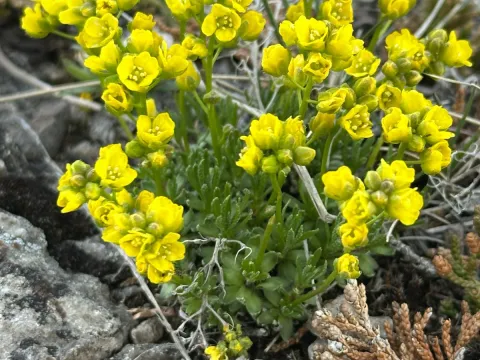
Few-seeded draba (Latin: Draba oligosperma) is a perennial herb belonging to the Brassicaceae family. It is widely recognized in horticultural circles for its dense, mat-forming growth habit, which allows it to function effectively as a rock garden groundcover capable of surviving in harsh, nutrient-poor conditions.
The native distribution of this plant is centered in the high-altitude regions of North America, particularly the Rocky Mountains. It thrives in exposed rocky slopes and alpine scree, environments that have shaped its physiological adaptations, including high drought tolerance and low nutrient requirements for basic survival.
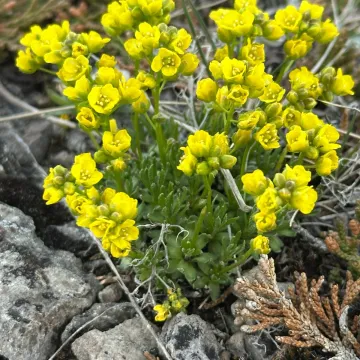
Botanically, the plant is characterized by basal rosettes of linear, often hairy leaves that trap moisture and reduce transpiration. In the spring, it produces short, erect stems bearing clusters of small, bright yellow, four-petaled flowers. Its deep taproot system is essential for anchoring the plant in shifting rocky debris, allowing it to withstand significant environmental stress.
Cultivation requirements necessitate well-draining, gritty soils with a neutral to slightly alkaline pH. Proper site selection is critical; the plant requires full sun exposure and will fail to thrive in damp or shaded garden borders. Over-watering during the dormancy period is the most common cause of root rot, necessitating the use of coarse aggregate around the crown of the plant.
- Requires full sun and excellent drainage.
- Perfect for rock gardens and crevice planting.
- Drought-tolerant once established.
- Minimal fertilizer requirements.
In terms of хозяйственное usage, Draba oligosperma is utilized primarily in ornamental horticulture to mimic natural alpine habitats. While not a conventional agricultural crop, it is a subject of interest for nurseries specializing in xeriscaping. Potential pests include spider mites during extreme heat, while protection against excessive moisture is the primary defense against fungal diseases.
Photo gallery