Draba scardica
Draba scardica
Description
Draba scardica is a low-growing perennial herbaceous plant belonging to the Brassicaceae (mustard) family. Unlike mainstream agricultural crops, this species is a highly specialized alpine plant valued primarily in botanical collections and specialized landscaping for its extreme resilience and compact growth habit.
The native range of this plant is centered in the high-altitude regions of the Balkan Peninsula, specifically within the mountain systems of Macedonia and surrounding areas. In its natural habitat, it thrives on rocky slopes, limestone crevices, and alpine meadows, where environmental conditions are marked by severe temperature fluctuations and intense solar radiation.
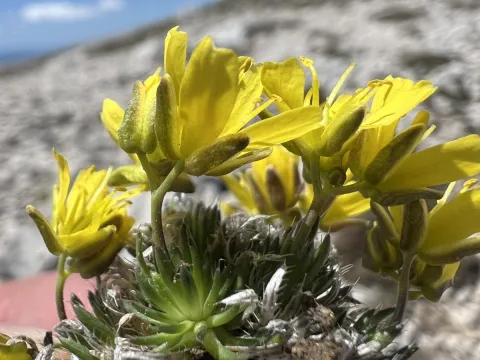
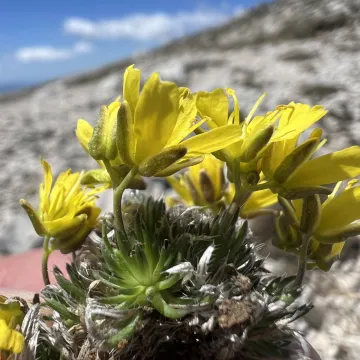
Botanically, the plant forms dense, cushion-like mats composed of small, basal rosette leaves. During the spring blooming season, the plant produces short, upright stems topped with small, bright yellow flowers arranged in racemes. Its root system is highly adapted to surviving in narrow crevices, showing an exceptional ability to extract nutrients from nutrient-poor, rocky substrates.
Successful cultivation of Draba scardica requires the simulation of high-altitude conditions. The core aspects of its agrotechnology include excellent drainage and the prevention of moisture accumulation around the root crown. The ideal substrate is slightly alkaline or neutral, well-aerated, and rich in grit or stone chippings. The plant is notoriously sensitive to waterlogging, necessitating careful site selection.
The primary use of Draba scardica is restricted to ornamental horticulture, particularly in the creation of rock gardens, scree beds, and alpine troughs. While it lacks significant food or industrial importance, the species is of interest for breeding programs aiming to develop hardy, ground-covering ornamentals. Typical pests and diseases include root rot fungi triggered by excessive soil moisture and potential damage from slugs during the active growing season.
- Requires well-draining, stony substrates.
- Prefers cool, well-ventilated environments.
- Susceptible to overwatering and high humidity.
Photo gallery