Starry whitlow-grass
Draba stellata
Description
Starry whitlow-grass (lat. Draba stellata) is a perennial herbaceous plant belonging to the Brassicaceae family. As an alpine species, it is highly regarded in botany for its unique adaptation to high-altitude environments, where it serves as a primary example of survival in harsh mountain climates.
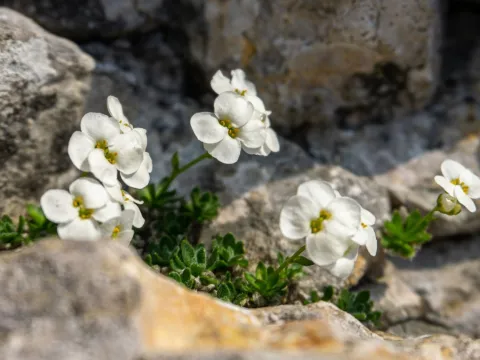
The origin of this species is linked to the mountain ranges of Europe, including the Alps, the Pyrenees, and the Carpathians. Its natural habitat consists of rocky slopes, screes, and alpine meadows. These areas provide the specific ecological niche required for its growth, characterized by limited soil depth and short growing seasons.
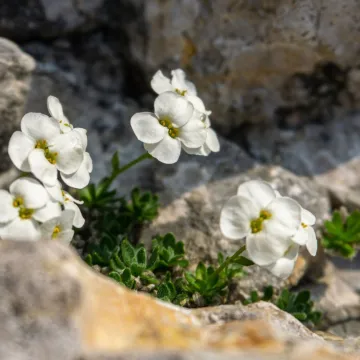
Botanically, the plant is distinguished by a basal rosette of leaves covered in characteristic stellate hairs, which protect the plant from desiccation. The flowering stems are erect and typically grow to a height of about 10–20 cm. The inflorescence is a terminal raceme of small white flowers that emerge mid-summer, providing a resilient bloom under mountain conditions.
Cultivation requirements for this species focus on providing an environment that mimics its natural habitat. It necessitates excellent drainage and high sun exposure to thrive. Soil should be well-aerated, rocky, and low in organic matter. Excessive moisture, especially during dormancy, can be detrimental to the plant, making soil structure management a priority for successful cultivation.
In terms of agricultural and practical use, Draba stellata is primarily utilized in ornamental horticulture for rock gardens and alpine rockeries. While it is not a large-scale agricultural commodity, it remains a subject of interest for plant breeders looking to understand stress-tolerance genes, which could potentially contribute to future research on crop hardiness.
- Exceptional cold tolerance for alpine regions.
- High dependency on mineral-rich, stony substrates.
- Compact growth habit suitable for miniature landscapes.
- Resilience against strong winds and UV radiation.
Photo gallery