Longan
Dimocarpus longan Lour.
Description
Longan (Dimocarpus longan Lour.) is a prominent evergreen fruit tree belonging to the Sapindaceae family. Closely related to lychee and rambutan, the tree is prized for its delicious, aromatic fruit, which features a succulent, translucent aril surrounding a single dark seed, giving it the appearance of an eye.
The species originated in Southern China and has historically been cultivated across Southeast Asia. Today, it is commercially grown in various tropical and subtropical regions worldwide, including Thailand, Vietnam, Taiwan, and parts of the United States, where farmers leverage its high demand in global markets.
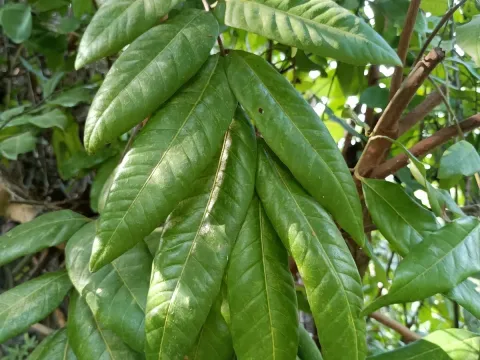
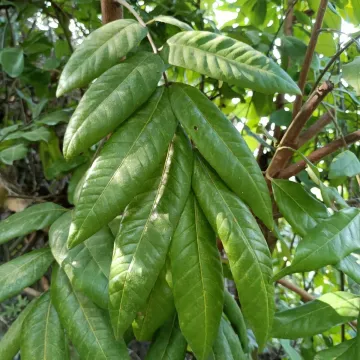
Botanically, the longan tree can grow to significant heights, ranging from 6 to 15 meters in orchard conditions. It features dense, pinnate, glossy green leaves that provide excellent shade. The flowers are small, yellowish-white, and produced in large, showy terminal panicles. The fruit is technically a drupe with a leathery, non-edible pericarp.
Optimal growth requires a warm climate with a distinct seasonal shift to induce flowering. While the tree can tolerate a variety of soil types, it thrives in well-drained, sandy loam soils with high organic matter. Proper irrigation is crucial during the flowering and fruit development stages, although the tree is sensitive to waterlogging, which can cause root rot.
Economically, longan serves multiple purposes. The fruit is consumed fresh, canned, or dried as a health food ingredient in traditional medicine. The timber is valued for its durability, often utilized in high-quality furniture making. Agricultural success depends on managing pruning to facilitate light penetration and harvest efficiency.
- Susceptibility to anthracnose and various powdery mildew species.
- Pest pressure from scale insects, mealybugs, and fruit borers.
- The necessity of regular soil analysis for nutrient management.
- Harvesting at the peak of maturity to ensure optimal sugar levels.
Photo gallery