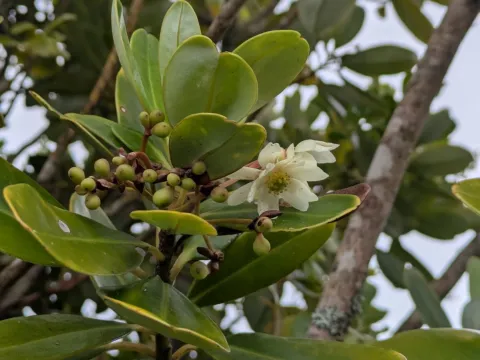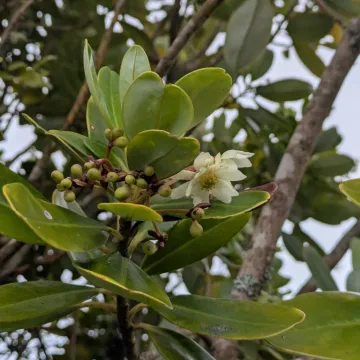
Drimys granadensis
Drimys granadensis
Description
Drimys granadensis is an evergreen woody species belonging to the Winteraceae family. It is recognized for its historical and botanical significance, often referred to as a primitive flowering plant. The species exhibits a distinct aromatic profile, which has made it a subject of interest in both traditional ethnobotany and modern horticultural studies.
Originating from the high-altitude cloud forests of the Neotropics, specifically extending from Mexico down to the Andean regions of Peru and Bolivia, this plant thrives in cool, humid environments. Its natural habitat is characterized by frequent precipitation and high atmospheric moisture, which are critical parameters for successful growth in managed agricultural or gardening environments.
Botanically, the plant is characterized by its glossy, lanceolate leaves and small, white, petal-bearing flowers. The bark and foliage contain high levels of volatile compounds, which contribute to its spicy, peppery scent. The tree typically reaches a moderate height, and its growth habit is well-suited for understory planting, where it can be protected from intense heat and direct sunlight.
Successful cultivation requires soil that is acidic, well-draining, and rich in organic matter. Farmers and growers must ensure that the planting site mimics the cool temperatures of the Andes. Key agronomic practices include consistent irrigation to maintain soil moisture, mulching to protect the shallow root system, and protection from severe winds that can desiccate the foliage.
In terms of хозяйственное (economic) utilization, Drimys granadensis is valued for its bark, which is used locally as a culinary spice and as a traditional medicine. Its potential as a niche essential oil crop is also being investigated. Common pests include scale insects and various leaf-chewing larvae, while over-saturation of the soil can lead to root pathogens, emphasizing the need for proper drainage management in all plantation types.
Photo gallery