Drummond's mountain avens
Dryas drummondii
Description
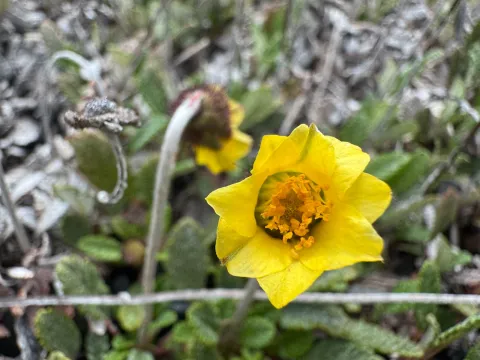
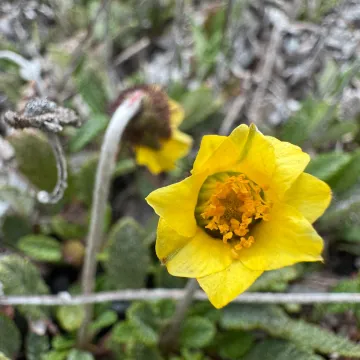
Drummond's mountain avens is a low-growing, evergreen perennial subshrub belonging to the Rosaceae family. It is widely recognized for its ability to form dense, mat-like ground covers that are highly valued in rock gardening. This species is unique among its genus for producing nodding, yellow flowers, which set it apart from the common white-flowered varieties.
The plant originates from the mountainous and arctic regions of North America, particularly across Canada and parts of the United States. It has evolved to thrive in harsh, cold environments, demonstrating exceptional winter hardiness. Its natural resilience has made it a preferred choice for gardeners in northern climates who need reliable, low-maintenance ground cover.
Botanically, the plant features trailing woody stems that are covered in leathery, oblong leaves with serrated margins and dense white pubescence on the underside. The root system is shallow but extensive, which allows it to colonize rocky substrates effectively. The plant is also known for its nitrogen-fixing capabilities, which enable it to grow in nutrient-poor environments.
Cultivation requirements focus primarily on drainage. The species strictly requires gritty, well-drained, alkaline to neutral soils. In garden settings, it is best planted in full sun to ensure maximum flowering. Avoid planting in heavy, clay-based soils or areas that hold water, as this will inevitably lead to root rot, the most common issue in cultivated specimens.
In terms of agricultural and landscape utility, it is primarily used for erosion control on slopes and for stabilizing rocky embankments. Because of its ability to fix nitrogen through symbiotic relationships with microbes, it is an essential pioneer species in revegetation projects for disturbed soils in alpine or sub-arctic zones, helping to build soil structure over time.
- Excellent cold tolerance.
- Low nutritional requirements.
- Effective erosion control agent.
- Minimal maintenance needed.
Regarding pests and diseases, the plant is quite hardy. The most critical threat is fungal rot caused by high humidity or standing water around the crown. Ensuring good air circulation is essential for health. In some regions, foliage-feeding insects may cause minor cosmetic damage, but generally, the plant remains free of significant pest pressure if cultural conditions are met.
Photo gallery