
Duboisia hopwoodii
Duboisia hopwoodii
Description
Duboisia hopwoodii is a perennial shrub belonging to the family Solanaceae. Known historically as "pituri" among Indigenous Australians, this plant has gained attention in modern agriculture due to its high concentration of specific alkaloids. It serves as a specialized technical crop that thrives in environments where other crops often fail due to severe water limitations.
The origin of this species is traced to the arid and semi-arid regions of inland Australia. The plant is perfectly adapted to desert-like conditions, demonstrating significant resilience to intense solar radiation and minimal rainfall. Its natural distribution is a testament to its evolutionary success in nutrient-poor, sandy soils that define much of the Australian outback.
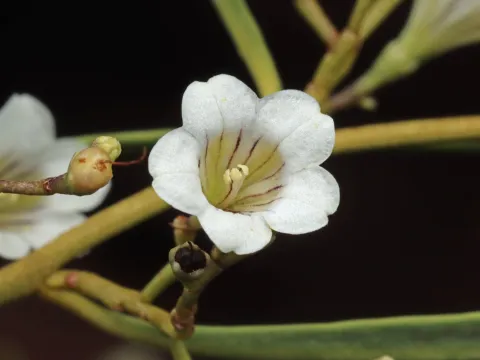
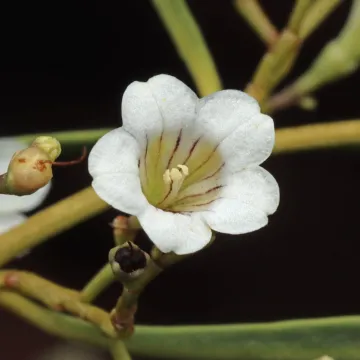
Botanically, Duboisia hopwoodii is characterized by its slender, leathery leaves and small, whitish-creamy flowers. The plant typically grows as an evergreen shrub, maintaining a deep root structure designed to exploit moisture stored in lower soil horizons. The chemical profile of its foliage is high in nicotine and nornicotine, which are the primary substances of commercial interest.
Regarding soil and climate requirements, the plant necessitates loose, well-drained soil to prevent root rot, which is the most common agronomic issue in cultivation. It thrives in high-temperature climates with low humidity. Cultivation practices involve managed seeding and careful monitoring of irrigation levels, ensuring the plant receives just enough water to facilitate healthy growth without inducing physiological stress or fungal pathogen outbreaks.
The economic value of this crop lies in the pharmaceutical industry. The raw leaves are harvested and processed to extract alkaloids used in medical and veterinary formulations, as well as in the production of specialized insecticides. Despite being a niche crop, the systematic management of Duboisia hopwoodii plantations is vital for ensuring the consistency and purity of the chemical compounds derived from it.
- Family: Solanaceae.
- Primary origin: Inland Australia.
- Key chemicals: Nicotine and nornicotine.
- Agronomic focus: Drainage and heat management.
- End use: Pharmaceutical and technical industry.
Photo gallery