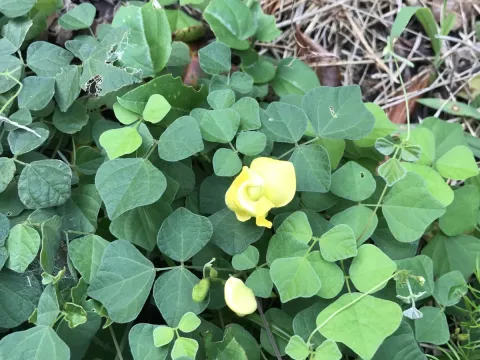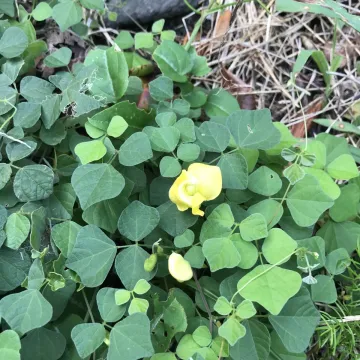
Dunbaria villosa
Dunbaria villosa
Description
Dunbaria villosa is a perennial herbaceous or semi-shrubby plant belonging to the Fabaceae family. As a climbing or trailing species, it serves as an important component of natural ecosystems and holds potential as a forage crop in sustainable agricultural systems. Its resilience makes it an object of interest for agronomists focused on low-input farming.
Native to regions of Asia and Australia, Dunbaria villosa is well-adapted to diverse environmental conditions, including tropical and subtropical climates. Its natural range allows it to thrive in woodlands and scrublands, demonstrating a high degree of phenotypic plasticity that enables survival in various soil types, ranging from sandy to clay-rich substrates.
Botanically, the plant is characterized by trifoliate leaves and densely villous (hairy) stems and seed pods, a feature that provides protection against certain environmental stressors. Like many legumes, its roots form symbiotic relationships with nitrogen-fixing bacteria, significantly contributing to nitrogen cycling in the ecosystem and soil health improvement.
Successful cultivation of this species requires well-drained soils and adequate exposure to sunlight. While it exhibits tolerance to dry conditions, optimal biomass production is achieved with sufficient rainfall during the growing season. Management practices should prioritize the prevention of weed competition during the early establishment phase to ensure high stand density.
Economically, Dunbaria villosa is primarily valued for forage production and as a green manure crop. Its protein-rich foliage provides high-quality feed for livestock, while its ability to stabilize soil makes it useful for erosion control on slopes. It is increasingly recognized in agroecology for its role in restoring degraded land and enhancing agricultural sustainability.
- Adaptability to nutrient-poor soils.
- Excellent natural nitrogen fixation capabilities.
- Effective use in soil erosion management.
- Nutritional value as a component of livestock feed.
Photo gallery