Durian
Durio zibethinus L.
Description
Durian (Durio zibethinus L.) is a tropical evergreen tree belonging to the Malvaceae family. Recognized for its massive, spiky fruit, this plant is considered a significant agricultural commodity in its native Southeast Asian regions. The tree can reach substantial heights, often requiring careful pruning and management to ensure structural stability and optimal fruit yield within commercial orchards.
The native range of the species spans the Malay Archipelago, including countries like Thailand, Indonesia, and Malaysia. As an obligate tropical plant, it thrives in warm, humid conditions where temperatures remain consistently above 22°C. Exposure to drought or prolonged cold snaps can severely impact tree health and fruit development, which is why commercial cultivation is strictly limited to equatorial climatic zones.
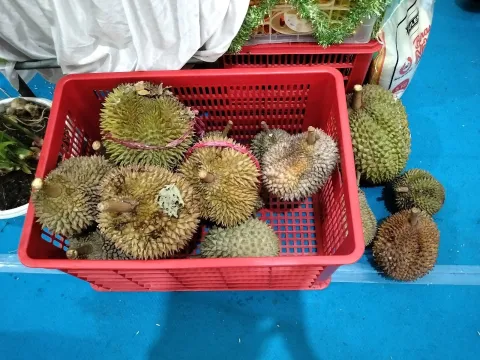
Botanically, the durian tree exhibits distinct characteristics, including large, alternate leaves and flowers that bloom in clusters. The fruit is technically a capsule that splits into compartments, each containing creamy, nutrient-dense pulp. The ripening process is complex, often involving specific physiological triggers that determine the characteristic aroma and flavor profile that make the fruit highly valued in local and international markets.
Successful durian cultivation requires deep, well-drained loamy soils with adequate organic matter. Agronomists emphasize the importance of drainage, as the species is highly susceptible to root rot if waterlogging occurs. Regular fertilization schedules, incorporating both macronutrients and trace elements, are essential to sustain the tree's rapid growth and high production demands during the fruiting season.
- Annual rainfall requirement: 1,500–2,500 mm.
- Propagation method: Mostly clonal via budding or grafting.
- Pollination: Primarily by bats and insects.
- Optimal soil pH: Slightly acidic, ranging from 5.5 to 6.5.
Pest and disease management is a critical aspect of durian farming. Common threats include the fruit borer (Conogethes punctiferalis), which can destroy significant portions of the crop, and Phytophthora pathogens that target the tree's root system and bark. Beyond fresh consumption, the durian industry supports various processed goods, including freeze-dried products, pastes, and traditional culinary items, cementing its status as a vital economic crop.
Photo gallery