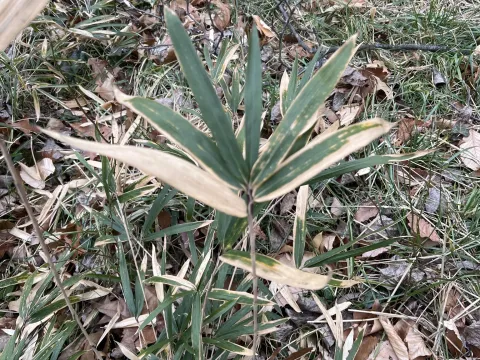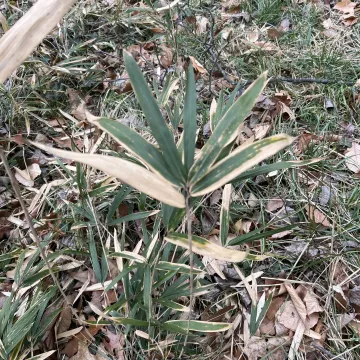
Dwarf white-striped bamboo
Arundinaria variegata (Siebold ex Miq.) Makino
Description
Arundinaria variegata, commonly known as dwarf white-striped bamboo, belongs to the Poaceae family. This evergreen perennial is widely recognized for its vibrant foliage, featuring distinctive creamy-white and green variegated leaves that brighten up shaded areas of the garden.
Native to East Asia, specifically Japan, this species naturally thrives in understory woodland environments. Its adaptation to these conditions makes it an excellent choice for garden settings that offer partial shade and consistent moisture. It is widely cultivated globally in temperate regions for its high ornamental value and manageable size.
Botanically, it is a rhizomatous grass that typically reaches heights of 30 to 60 centimeters. The plant produces thin, upright culms that cluster together, forming dense patches. The leaves are narrow and lance-shaped, contributing to the delicate, feathery appearance of the clumps throughout the growing season.
Cultivation requires fertile, well-draining soil with a slightly acidic to neutral pH. It performs best in partial shade, as excessive direct sunlight can cause leaf scorch, diminishing the striking variegation. Regular watering is crucial during dry spells to maintain leaf health. Because it spreads via rhizomes, gardeners often install root barriers to contain its growth within a specific area.
While generally hardy, the plant is susceptible to common pests such as spider mites, especially in low-humidity environments. Leaf spot diseases may occasionally occur if air circulation is poor or if the foliage remains wet for too long. With proper maintenance, including annual pruning of old culms, this bamboo remains a durable and aesthetic feature in any landscape design.
Photo gallery