Dysphania aristata
Dysphania aristata
Description
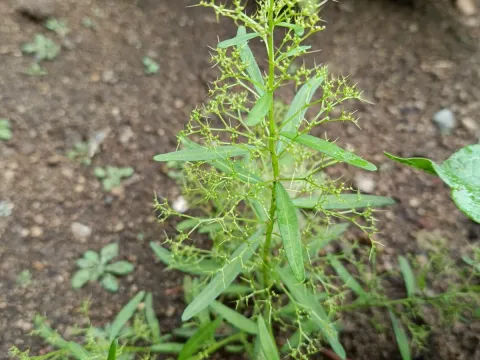
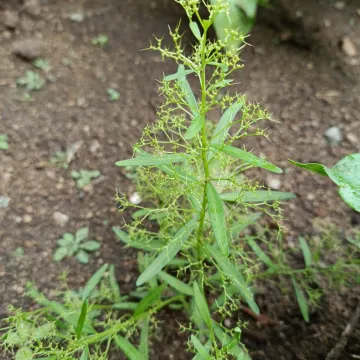
Dysphania aristata, commonly known as awned goosefoot, is an annual herbaceous plant within the Amaranthaceae family. Although often categorized alongside common weeds, it represents a unique botanical species with distinct physiological adaptations that allow it to thrive in nutrient-poor and arid environments.
Originating from the steppe regions of Central and East Asia, this species has successfully colonized diverse landscapes ranging from sandy riverbanks to mountain slopes. Its natural distribution is a testament to its resilience, as it remains one of the few species capable of sustained growth under harsh continental climates with significant temperature extremes.
Botanically, the plant is characterized by its glandular, pubescent foliage and stem structure. The leaves are typically lanceolate, and the flowers are gathered in dense, spike-like inflorescences. The presence of aristate (awn-like) bracts is a key identification feature, distinguishing it from related members of the Dysphania genus.
The agronomic requirements for cultivating this species are relatively low compared to traditional cereals. It prefers well-drained, alkaline, or neutral soils and requires high light intensity. Irrigation is rarely needed once the plant is established, as its root system is highly efficient at extracting moisture from subsoil layers. Minimal fertilization is recommended to prevent excessive vegetative growth at the expense of seed production.
Regarding its utility, the plant is primarily investigated for its phytochemical profile and potential as a forage resource in arid zones. It contains secondary metabolites that contribute to its pest resistance, making it a robust crop that rarely requires chemical intervention. Future research focuses on its yield stability and nutritional density in livestock feeding programs.
Photo gallery