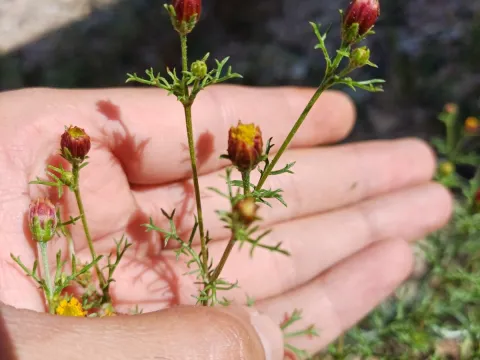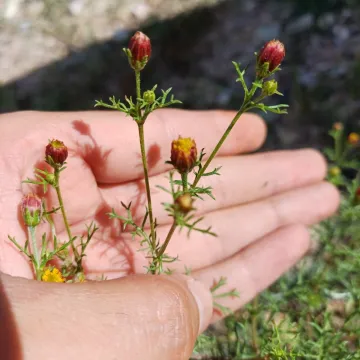
Dyssodia papposa
Dyssodia papposa
Description
Dyssodia papposa, commonly known as fetid marigold, is an annual plant belonging to the Asteraceae family. It is gaining interest in agricultural sectors as a specialty crop, valued primarily for its unique chemical profile and essential oil content. The plant is characterized by its pungent aroma and bright, yellow daisy-like flowers that bloom throughout the warmer months.
Native to North America, the plant is naturally adapted to dry, sandy, and disturbed environments. Its historical range is extensive, spanning from the plains to mountainous regions. In modern agricultural practice, it is being explored for its high adaptability to varying soil types and its ability to thrive in marginal lands where traditional crops might fail.
Botanically, it features finely dissected, feathery foliage and a highly branched stem structure. The root system is deep and fibrous, which helps the plant stabilize soil and access moisture from deeper soil layers. These characteristics make it a robust candidate for integrated pest management systems and erosion control programs in arid climates.
In terms of cultivation, Dyssodia papposa requires full sun exposure and well-drained, porous soils. It is highly drought-tolerant once established but needs adequate moisture during germination. It does not require intensive fertilization, making it a low-input crop suitable for sustainable farming practices that aim to reduce chemical dependency.
- Excellent drought and heat tolerance.
- Production of aromatic oils with potent biochemical properties.
- Natural repellent capabilities against various agricultural pests.
- Contribution to soil health through root biomass.
Its primary agricultural uses involve the extraction of essential oils and its application as a biological pest control agent in crop rotation. Common pests include aphids and mites, while fungal pathogens like root rot can occur if soil drainage is insufficient. Proper field management and spacing are crucial to ensure good aeration and disease prevention.
Photo gallery