Wild cucumber
Echinocystis lobata
Description
Wild cucumber (Echinocystis lobata) is an annual climbing vine belonging to the Cucurbitaceae family. Often characterized by its rapid growth and explosive seed dispersal mechanism, this plant is a prominent species in various temperate regions worldwide. While valued for its ornamental properties, its aggressive growth pattern often leads to its classification as an invasive species in many ecological zones.
Native to North America, the species has naturalized across Europe and Asia, where it thrives in moist, nitrogen-rich environments. It is frequently found along riparian corridors, woodland edges, and uncultivated fields. Its ability to dominate space and climb over shrubs and trees makes it a highly competitive species that can rapidly transform the vegetation structure of a given area.
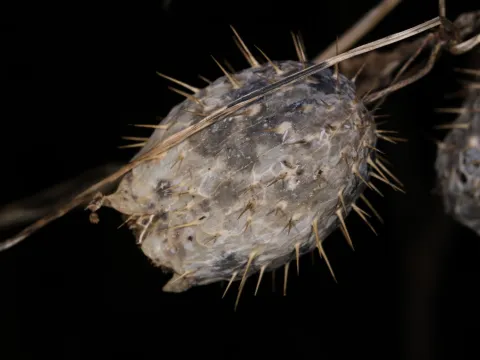
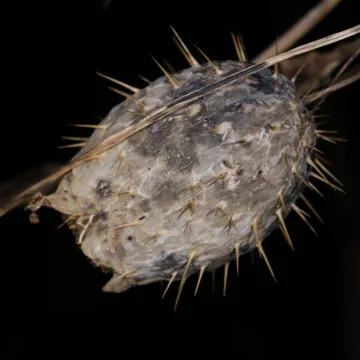
The botany of the plant is defined by its sprawling, vine-like habit, featuring branched tendrils that allow it to scale vertical supports efficiently. The leaves are typically five-lobed and light green. The plant produces delicate white or greenish-yellow flowers in racemes, followed by ovate, prickly fruits. As the fruit matures, it becomes buoyant and brittle, eventually splitting to release dark, flattened seeds.
In terms of cultivation, Echinocystis lobata is remarkably undemanding. It prefers fertile, moist soils but shows great plasticity regarding soil types. It performs best in full sun but can tolerate partial shade. Since it is an annual, it relies on seeds for propagation each year. The main requirement for its maintenance is the provision of adequate structural support; without it, the vine will cover the ground, potentially choking out smaller surrounding plants.
Regarding its utility, the wild cucumber is primarily used in landscaping for decorative fencing or as a quick-fix privacy screen. It also serves as a source of nectar for local pollinators during the flowering season. While it is rarely grown as a standard agricultural crop, its rapid biomass production is sometimes studied in the context of soil conservation or green manure, provided that the risk of uncontrollable spread is mitigated through careful management.
- Extreme annual growth rates.
- Excellent coverage for vertical structures.
- High tolerance for environmental variability.
- Attractive scent during the blooming period.
Photo gallery