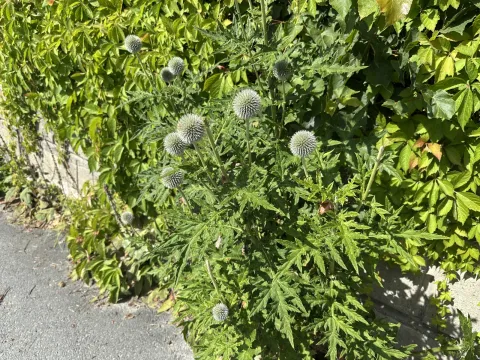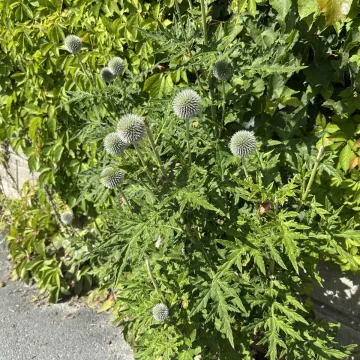
Globe thistle
Echinops exaltatus
Description
Globe thistle (Latin Echinops exaltatus) is a robust perennial herb belonging to the Asteraceae family. This species is recognized for its impressive height, often reaching two meters, and its distinctive spherical inflorescences which provide a significant nectar source for pollinators.
The plant is native to Central and Southeastern Europe. In agriculture, it has gained popularity as a specialized honey crop due to its ability to thrive in diverse soil conditions and provide late-season floral resources for apiaries when other melliferous plants have completed their cycle.
Botanically, Echinops exaltatus features prickly, deeply pinnatifid leaves and dense, globular flower heads. Its deep taproot system makes it exceptionally hardy and tolerant of dry summers, allowing it to maintain growth even when topsoil moisture is limited. It is a long-lived plant that can persist in a field for many years.
Cultivation requirements are relatively modest. The crop prefers open, sunny locations and well-drained, nutrient-rich soils. Standard agrotechnology involves sowing in early spring, keeping the rows weed-free during the establishment phase, and ensuring adequate spacing to promote airflow and prevent fungal infections.
The main commercial utility of the globe thistle lies in its exceptional nectar secretion rates, making it a staple for beekeepers seeking high honey yields. Furthermore, it is increasingly harvested for its medicinal properties, specifically the extraction of echinopsine, which is utilized for its tonic effects on the human cardiovascular and muscular systems.
- Excellent source of nectar and pollen.
- High drought tolerance and low maintenance.
- Source of pharmaceutical raw materials.
- Provides long-lasting bloom for biodiversity.
Photo gallery