Gmelin's globe thistle
Echinops gmelinii
Description
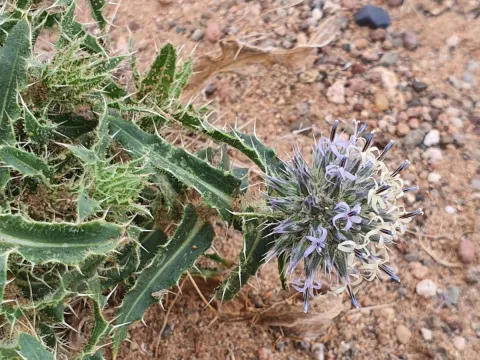
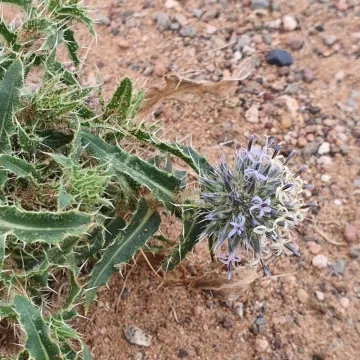
Echinops gmelinii, commonly known as Gmelin's globe thistle, is a perennial herbaceous plant belonging to the Asteraceae family. It is recognized for its architectural appearance, featuring prickly, deeply lobed leaves and distinctive, spherical flower heads that bloom throughout the summer season.
The native distribution of this species spans the steppe regions of Central Asia and parts of Eastern Europe. Its natural habitat includes dry, open grasslands, rocky slopes, and arid plains. This evolutionary history makes it highly adapted to harsh environments where water scarcity and extreme temperature fluctuations are common.
Botanically, the plant is characterized by a robust taproot system, which allows it to thrive in poor or gravelly soils by accessing deep moisture reserves. The foliage is typically silver-green and covered in fine hairs, a protective feature against excessive evaporation, while the globose flower heads are magnets for diverse pollinators.
Agronomic requirements are minimal, making this species an excellent candidate for low-input agriculture. It prefers full sun and well-drained, alkaline to neutral soil types. Once established, the plants demonstrate exceptional drought tolerance and require no significant fertilization, as they are well-adapted to surviving in nutrient-poor environments.
- Excellent nectar production for honeybees.
- High survival rate in semi-arid conditions.
- Potential use in soil erosion prevention.
- Low susceptibility to common agricultural pests.
The primary economic use of Echinops gmelinii lies in apiculture, as it serves as a reliable source of high-quality nectar. In addition to its role as a honey plant, it has historical significance in traditional medicine. The plant is relatively resistant to major agricultural diseases, though it should be monitored for aphid infestations during exceptionally humid spells, which are rare in its preferred climate.
Photo gallery