Echinops humilis
Echinops humilis
Description
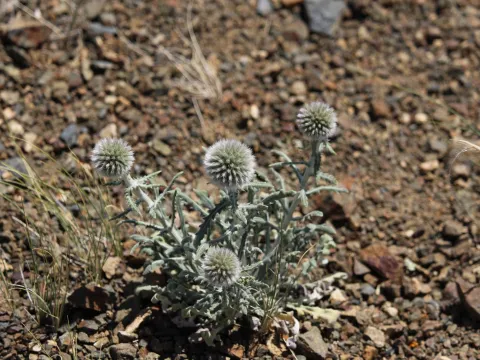
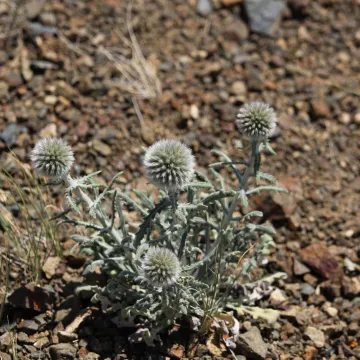
Echinops humilis, commonly referred to as a species of globe thistle, is a perennial herbaceous plant belonging to the Asteraceae family. In agricultural contexts, it is primarily recognized for its significant utility as a forage crop for pollinators, particularly honeybees. The plant is distinguished by its rigid, spherical, blue-toned flower heads and its ability to thrive in environments where other crops struggle.
The native range of this species extends across the eastern regions of Asia, including Siberia and Mongolia. It is well-adapted to steppe ecosystems, characterized by open plains and rocky terrain. Due to its evolutionary background, the plant displays a remarkable resilience to temperature fluctuations and can establish itself in challenging soil conditions across various temperate climates.
Botanically, Echinops humilis features a deep taproot system, which serves as a reservoir for nutrients and moisture during drought seasons. The foliage is typically dissected and carries small, sharp spines. The spherical inflorescences are composed of numerous individual florets that open progressively, ensuring a sustained supply of nectar and pollen for pollinators throughout the peak summer months.
When it comes to agronomic requirements, the species is remarkably low-maintenance. It prefers well-drained, sunny locations and is tolerant of slightly alkaline or nutrient-poor soils. Once established, the plants are drought-tolerant and frost-hardy, requiring minimal irrigation. Cultural practices primarily focus on weed management during the seedling stage to ensure proper crop establishment.
The primary agricultural and industrial applications include:
- Providing high-quality nectar sources for commercial apiculture.
- Harvesting extracts for pharmaceutical research (e.g., alkaloids like echinopsine).
- Utilization in land restoration projects to stabilize soil and prevent erosion.
- Sustainable integration into agroforestry and ornamental farm landscapes.
While generally robust, the crop can be susceptible to root-related issues such as crown rot if planted in waterlogged fields with poor drainage. Insect pests, such as leaf beetles or various species of weevils, may cause minor cosmetic or structural damage. Effective management involves regular field monitoring, ensuring proper spatial distribution of plants, and maintaining adequate airflow between rows to minimize fungal pressure.
Photo gallery