Globe thistle
Echinops longifolius
Description
Globe thistle (Echinops longifolius) is a hardy perennial herbaceous plant belonging to the Asteraceae family. It is recognized in agriculture primarily for its exceptional honey-producing potential and its resilience, making it a valuable crop for sustainable agricultural systems and apiary management.
Originating from Southeastern Europe and parts of Western Asia, the plant is naturally adapted to dry, stony environments and steppe climates. Its range of cultivation has expanded due to its ability to thrive in various soil conditions, provided that the location offers full sun exposure and efficient drainage.
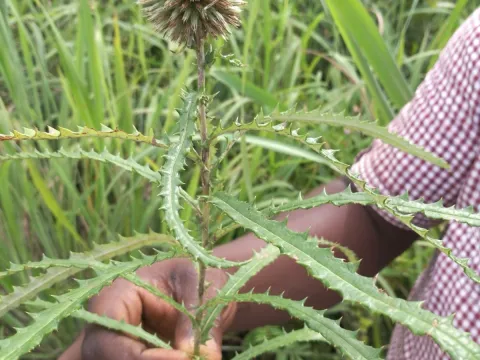
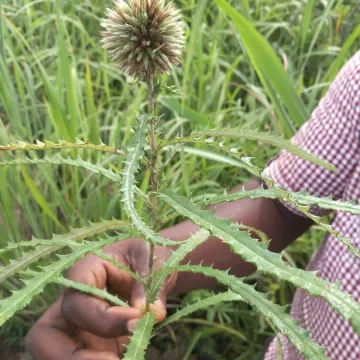
The botanical structure of the plant consists of a sturdy, upright stem and deeply lobed leaves with spiny margins. The most distinguishing feature is the spherical, globe-shaped flower head, which produces a rich nectar. These heads typically bloom in shades of blue or steel-gray, creating a striking appearance and serving as a high-value resource for local pollinators.
For successful cultivation, the crop prefers well-drained, neutral to alkaline soil. It is remarkably drought-tolerant once established. Agricultural practices should focus on weed management during the seedling stage, as growth is relatively slow initially. Once the plants reach maturity, they require minimal intervention, as their deep root systems provide excellent resilience against environmental stress.
The primary agricultural and economic uses include:
- Utilizing the plant as a prime honey-producing crop, often planted near apiaries to boost honey yields.
- Harvesting extracts for the pharmaceutical industry, specifically the alkaloid echinopsine, which has pharmacological applications.
- Integration into sustainable land management to provide biodiversity and soil stabilization on sloping terrain.
Common issues in cultivation involve pests such as aphids and specific beetles that may target flower heads, as well as fungal diseases like powdery mildew in overly humid conditions. Effective management requires maintaining adequate spacing between plants to ensure good air circulation, which significantly reduces the risk of fungal outbreaks and promotes healthy crop development.
Photo gallery