Oriental globe thistle
Echinops orientalis
Description
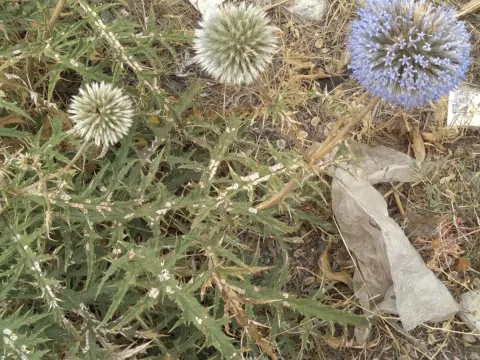
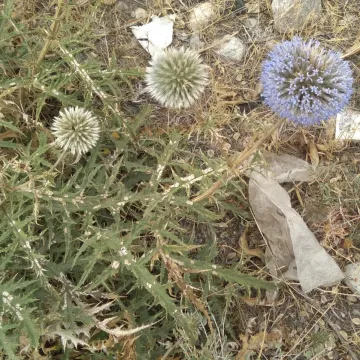
The Oriental globe thistle (Echinops orientalis) is a robust herbaceous perennial belonging to the Asteraceae family. It is widely recognized for its distinctive, spherical flower heads that feature a striking blue coloration and prickly bracts, forming a unique architectural profile in field settings.
Originating from the regions of the Caucasus and Western Asia, this plant has adapted to survive in diverse environmental conditions. It is known for its exceptional drought tolerance, which allows it to thrive in arid climates and on low-fertility soils where many other agricultural crops would fail to establish a healthy population.
Botanically, the species is defined by a deep taproot system, which serves as a reservoir for nutrients and moisture. The plants typically reach a height of 100 to 150 centimeters, with stiff, serrated, and prickly foliage. The structure of the plant acts as a natural defense mechanism against herbivores, contributing to its durability in open field environments.
In terms of agricultural management, the Oriental globe thistle prefers well-drained, sun-exposed sites. While it is not demanding regarding soil quality, it performs best in soils with neutral to slightly alkaline pH levels. Planting is typically conducted via direct sowing, and once the taproot is established, the plant requires minimal irrigation, making it a sustainable choice for extensive farming systems.
The primary economic value lies in apiculture, as the plant is an excellent nectar source that supports high honey production rates throughout the summer. Additionally, extracts derived from the plant contain echinopsine, which is utilized in pharmacological research for its potential neurological benefits. Disease management focuses primarily on preventing powdery mildew through adequate spacing and ensuring sufficient airflow between plants.
Photo gallery