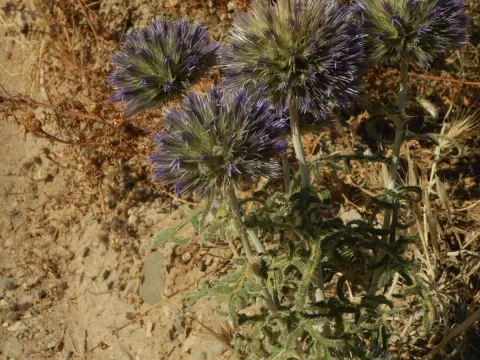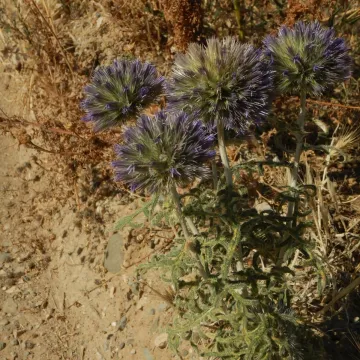

Bristly globe thistle
Echinops strigosus
Description
Bristly globe thistle (Echinops strigosus) is a perennial herbaceous plant belonging to the Asteraceae family. This species is gaining attention in sustainable agriculture due to its remarkable resilience and ability to thrive in challenging environmental conditions. It is characterized by its distinct spherical flower heads and sharp, spiny bracts that protect the developing florets.
Originating from the Mediterranean region and the Iberian Peninsula, this plant has adapted to rocky and arid habitats. Its native range includes areas where annual rainfall is limited, making it an excellent candidate for cultivation in drylands. The plant demonstrates high efficiency in utilizing available soil nutrients and moisture, allowing it to survive in regions that are otherwise unsuitable for conventional crops.
Botanically, Echinops strigosus features a stout, erect stem covered in prickly foliage. The root system is deep-reaching, providing excellent anchoring and drought resistance. The inflorescences are dense globes that attract a wide variety of pollinators, making the plant a powerhouse for local biodiversity. Its reproductive strategy includes high seed production, which ensures the persistence of the crop over multiple years.
The cultivation of the bristly globe thistle requires minimal agricultural intervention. It performs best in well-drained, sandy or loamy soils with a neutral pH. Excessive moisture is the primary factor that limits its development, so site selection should focus on areas with good natural drainage. Sowing is typically carried out in spring, ensuring the seeds are placed at a depth that allows for proper germination in warming soil.
- Excellent drought tolerance suitable for arid farming zones.
- Significant nectar yield for apiculture purposes.
- Low maintenance requirements after establishment.
- Effective soil stabilization properties on sloped terrains.
Economically, the primary use of Echinops strigosus is in beekeeping, where it serves as a reliable late-season nectar source. Beyond apiculture, research into the phytochemical composition of its seeds and roots suggests potential applications in the development of botanical medicines. It also provides ecological benefits by maintaining ground cover in areas vulnerable to desertification.
Regarding pest and disease management, the plant is relatively hardy. However, it can be susceptible to powdery mildew under conditions of high humidity and poor ventilation. Common pests include aphids and small beetles that may target the inflorescences during the budding phase. Managing weed competition during the initial establishment year is crucial to ensure the long-term productivity of the stand.
Photo gallery