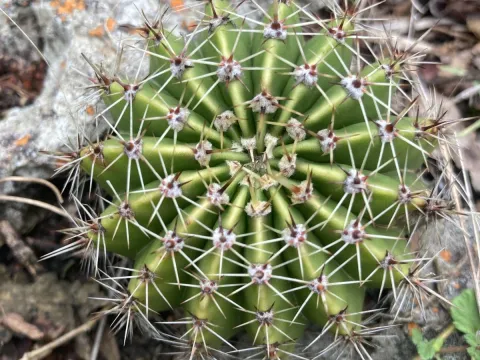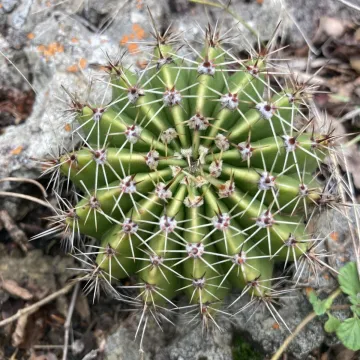
Echinopsis eyriesii
Echinopsis eyriesii
Description
Echinopsis eyriesii is a perennial succulent plant belonging to the Cactaceae family. Within the horticultural industry, it is widely recognized as a popular ornamental species, primarily valued for its large, nocturnal, fragrant white flowers and its architectural, ribbed, globular stem structure.
Native to the arid regions of South America, specifically Argentina, this species has been cultivated globally as a greenhouse crop and a common indoor plant. It thrives in environments that replicate its natural habitat, characterized by intense sunlight, low humidity, and distinct seasonal variations in temperature that trigger its blooming cycle.
Botanically, the plant features a deep green, ribbed stem adorned with areoles bearing small spines. Its growth habit is characterized by the formation of offsets (pups) at the base, which allows for efficient vegetative propagation. The root system is relatively shallow, necessitating the use of well-draining substrates to ensure adequate oxygen circulation around the root zone.
Agricultural requirements for Echinopsis eyriesii focus on light exposure and water management. High light intensity is essential to prevent etiolation (stretching). The soil mix must be highly porous, typically consisting of cactus potting soil amended with grit or perlite. During the dormant winter period, the plant requires near-dry conditions and cooler temperatures to prepare for the spring growth phase.
The primary utility of this plant is found in ornamental horticulture, where it serves as a staple for both amateur and professional cactus collections. Like many succulents, it is susceptible to specific pests, such as mealybugs and spider mites, and root rot if soil moisture levels remain consistently high. Proper air circulation and controlled watering remain the primary defenses against these botanical challenges.
Photo gallery