Echinospartum boissieri
Echinospartum boissieri
Description
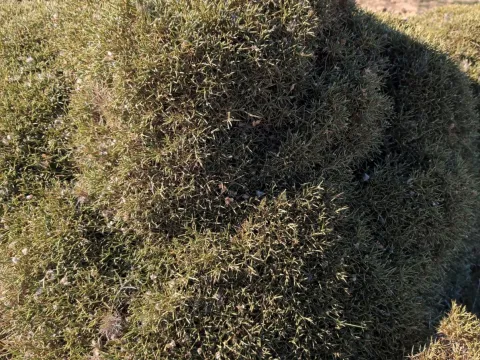
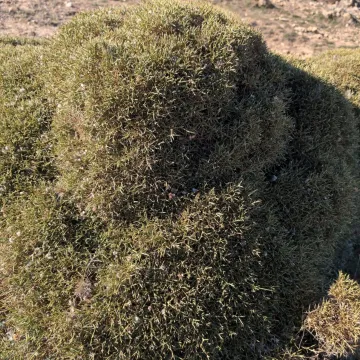
Echinospartum boissieri is a perennial woody shrub belonging to the Fabaceae (Legume) family. This species is recognized for its dense, cushion-like growth habit and its evolutionary adaptation to the harsh, wind-swept environment of mountainous regions.
The plant is endemic to the high-altitude areas of the Iberian Peninsula, particularly within the Sierra Nevada mountain range in Spain. It thrives in alpine climates where environmental stressors, such as high UV radiation, rocky substrates, and severe temperature fluctuations, are common.
Botanically, the plant is characterized by its spinescent, highly branched stems that provide protection against grazing and help reduce transpiration. During the flowering phase, it produces clusters of bright yellow, pea-like flowers that contrast sharply with its dark, prickly foliage.
In terms of cultivation, Echinospartum boissieri requires full sun exposure and extremely well-drained, nutrient-poor soil. It is a quintessential xeriscaping plant, requiring very little supplemental irrigation once established. It is ill-suited for heavy clay soils or areas with high humidity, which can lead to root rot.
Regarding its utility, the species is primarily valued for its role in sustainable landscaping and slope stabilization. Because of its deep root system, it acts as a soil binder, preventing erosion in challenging terrains. It is also an excellent candidate for ornamental use in rock gardens, contributing to a rugged, natural aesthetic.
The species is remarkably resistant to common pests and plant diseases. Its tough, spiny nature deters most herbivores, and its specialized physiology makes it less susceptible to the fungal infections that affect more mesic shrub species, making it a low-maintenance choice for professional landscapers.
Photo gallery