Yellow viper's bugloss
Echium flavum
Description
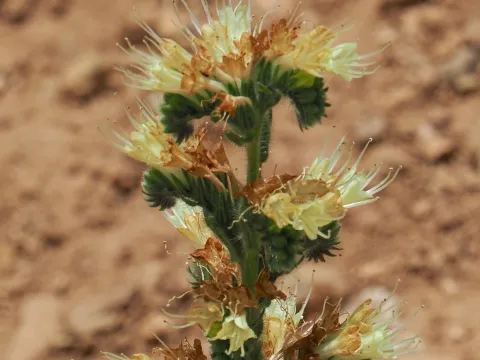
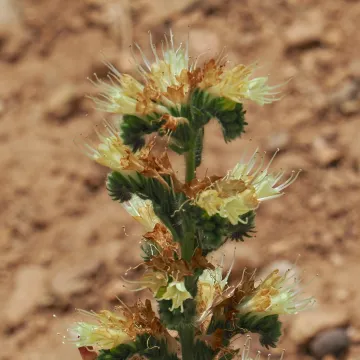
Yellow viper's bugloss (Echium flavum) is a perennial herbaceous plant belonging to the Boraginaceae family. Unlike many of its relatives known for vibrant blue flowers, this species is distinguished by its unique yellow inflorescences, making it a significant botanical specimen within its native range and in specialized agricultural projects.
The plant originates from the arid and semi-arid regions of Southeastern Europe and Western Asia. Its natural distribution is tied to steppes and open, rocky terrains where the species has evolved to thrive in high-sunlight conditions and varying soil moisture levels, demonstrating a robust ecological footprint.
Botanically, Echium flavum features a sturdy, upright stem covered in bristly hairs, which act as a defense mechanism against excessive transpiration and herbivory. Its root system is deeply anchored, allowing it to survive periods of intense drought, which is a critical trait for sustainable cultivation in Mediterranean and continental climates.
Agronomic requirements are focused on well-drained, lime-rich, or sandy soils. It does not demand high levels of fertilizers, making it suitable for low-input farming systems. Cultivation involves careful seedbed preparation and adequate plant spacing to ensure vigorous rosette development during the first year, after which the plant becomes largely self-sustaining.
The primary agricultural utility of this plant lies in its excellence as a honey source, providing crucial nectar during dry summer months when other forage plants have wilted. Additionally, its deep roots and soil-binding capability make it a candidate for phytoremediation and erosion control on degraded agricultural land or abandoned pastures.
- Exceptional drought resistance and thermal tolerance.
- Extended flowering period beneficial for apiculture.
- Low susceptibility to common pests of field crops.
- Effective at stabilizing soil on sloped terrain.
Photo gallery