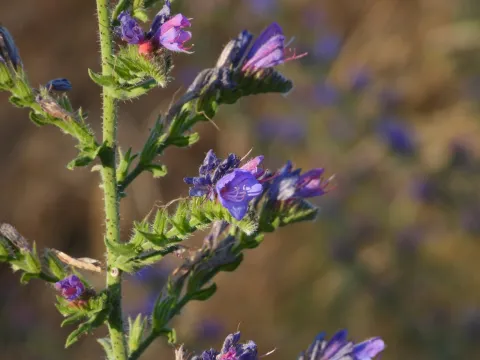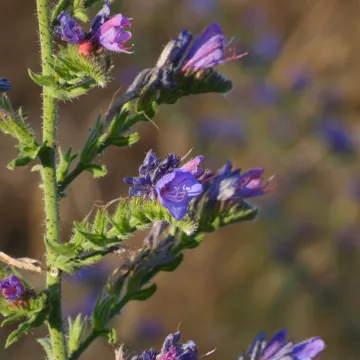
Echium gaditanum
Echium gaditanum
Description
Echium gaditanum is a robust herbaceous plant belonging to the Boraginaceae family. It is highly regarded in agricultural circles for its remarkable resilience to harsh environments and its capacity to thrive where water availability is restricted. Its unique biological traits make it an excellent candidate for sustainable land management in Mediterranean-type climates.
Originating from the western Mediterranean basin, particularly the Iberian Peninsula, this plant has adapted to withstand intense solar radiation and periodic droughts. Its geographic distribution is primarily limited to areas with well-drained soils and warm winters, where it successfully competes with other native flora by utilizing its deep taproot system.
Botanically, Echium gaditanum is characterized by its stiff, bristly foliage and vibrant, tubular flowers that emerge in dense, coiled inflorescences. The structural adaptation of its leaves helps minimize evapotranspiration, allowing the plant to maintain physiological activity even during prolonged heatwaves. These features ensure its survival in arid and semi-arid conditions.
Agricultural cultivation of this species requires minimal intervention. It thrives in poor, sandy, or rocky soils provided they are free-draining, as waterlogging is a primary factor inhibiting its development. When planning cultivation, it is essential to ensure adequate plant spacing to avoid fungal diseases that may result from high humidity trapped within dense clusters.
The primary economic value of this crop lies in its role as a high-quality honey plant. It remains a reliable source of nectar during periods when most forage crops are dormant due to heat stress. Additionally, it serves as a valuable cover crop for land restoration and soil stabilization, helping to mitigate erosion in vulnerable rural areas.
- Exceptional tolerance to heat and drought.
- High-value nectar production for apiculture.
- Low soil fertility requirements.
- Deep root system aids in soil structure stabilization.
Photo gallery