Echium leucophaeum
Echium leucophaeum
Description
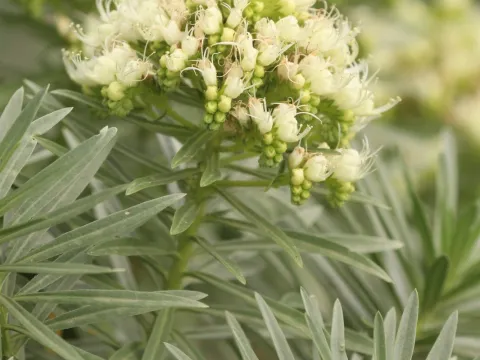
Echium leucophaeum is a perennial plant species belonging to the Boraginaceae family. Recognized for its structural resilience and specialized adaptation to rocky environments, this crop is increasingly noted for its utility in Mediterranean-style farming systems. It is characterized by a vigorous growth habit and an impressive ability to thrive in challenging soil conditions.
The origin of this species is tied to the Canary Islands, where it evolved within volcanic landscapes and mild, dry climates. Its current range is primarily limited to regions with similar ecological profiles, where it is utilized in niche agricultural applications. It is particularly valued in areas where low-input crops are required to maintain soil health and support local biodiversity.
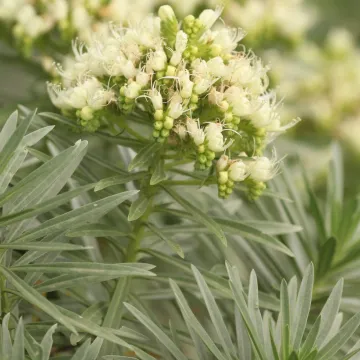
Botanically, Echium leucophaeum features rough, hairy foliage which serves as a protective mechanism against evaporation. The plant develops large, branched inflorescences that carry numerous flowers throughout the bloom period. Its root system is exceptionally deep, enabling the plant to access moisture reserves that are otherwise unavailable to conventional crops, thus ensuring its survival during dry seasons.
Regarding agronomic requirements, the crop demands well-drained, sandy, or rocky soils and full sun exposure. It is highly intolerant of waterlogging, which often leads to root collar decay. Fertilization should be kept to a minimum, as the plant is adapted to nutrient-poor soils. Regular monitoring of air circulation is essential to prevent mold-related issues in the dense foliage of the plant.
The primary economic value of Echium leucophaeum lies in apiculture, as it serves as a robust source of nectar for pollinators. Its inclusion in agricultural fields can significantly boost local honey production. Potential pests include aphids and mites, which can be managed through natural predators. Diseases are mainly restricted to fungal infections, which are easily mitigated by avoiding over-irrigation and maintaining proper spacing between individual plants.
Photo gallery