Small-flowered viper's bugloss
Echium parviflorum
Description
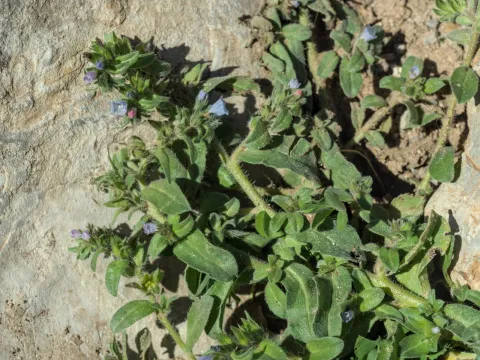
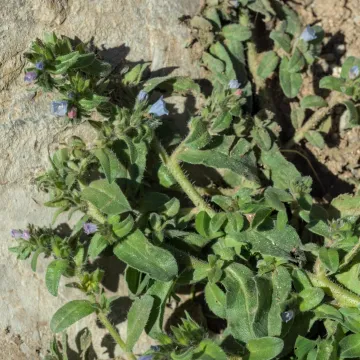
Small-flowered viper's bugloss (Echium parviflorum) is an annual herbaceous plant belonging to the Boraginaceae family. Distinguished by its smaller floral structures compared to other species in the genus, this plant is well-adapted to Mediterranean climates and possesses significant resilience to arid environmental conditions.
The plant originates from the Mediterranean basin and is commonly found in dry, rocky, and disturbed habitats. Its native range emphasizes its role as a pioneer species in challenging landscapes. In modern agronomy, it is increasingly recognized for its potential in xeriscaping and sustainable revegetation of degraded agricultural land.
Botanically, Echium parviflorum exhibits a characteristic hairy stem and foliage, which serves as a protective mechanism against rapid transpiration. The flowers are arranged in helicoid cymes and serve as a crucial nectar source for bees and various pollinating insects, contributing significantly to local biodiversity within crop ecosystems.
Cultivation requirements for this crop are relatively modest. It thrives in well-drained, sandy, or rocky soils and requires full sun exposure for optimal development. The agronomic approach focuses on minimal input, as the plant is adapted to nutrient-poor soils. Proper management involves controlling seeding rates to ensure uniform growth and prevent competition in high-density stands.
The primary agricultural use is supporting apiculture, as it is a prolific nectar producer. Additionally, its robust root system helps in stabilizing soil against erosion in arid zones. Potential threats include soil-borne fungal pathogens caused by waterlogging and infestations by sap-sucking pests, which can be mitigated through proper crop spacing and field hygiene.
Photo gallery