Pale bugloss
Echium pycnanthum
Description
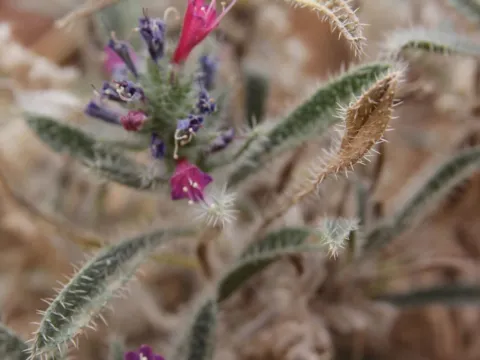
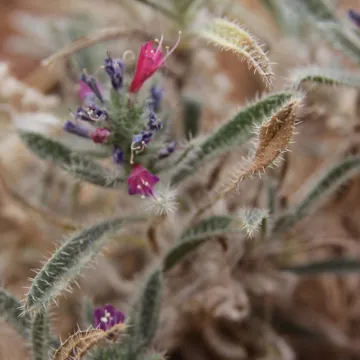
Echium pycnanthum, commonly known as pale bugloss, is a significant agricultural crop belonging to the Boraginaceae family. It is globally recognized by agronomists and beekeepers as one of the most efficient honey-producing plants, capable of maintaining high nectar secretion rates even under arid climatic conditions.
Originally native to the Mediterranean region and Southern Europe, this species has successfully naturalized in various temperate agricultural zones. Its adaptability to diverse environments has allowed it to become a staple crop for landowners looking to enhance local biodiversity and support pollinator populations.
Botanically, it is typically a biennial herb characterized by a rosette of basal leaves during its first year, followed by a sturdy, branched flowering stem reaching up to 1.5 meters in height in its second year. Its unique, dense inflorescences carry numerous flowers that bloom sequentially, ensuring a long and reliable source of forage for bees.
The crop thrives in well-drained, sandy or calcareous soils and is remarkably tolerant of low-fertility ground. In terms of cultivation, it requires full sun exposure and minimal irrigation once established. Farmers should ensure proper spacing to prevent competition between plants, usually employing row cultivation to facilitate mechanical weeding and crop maintenance.
While primarily cultivated to boost honey production, it also serves as an effective erosion control plant on sloping farmlands. Growers should remain vigilant regarding common threats such as fungal diseases linked to high humidity or leaf-feeding insects, though the crop is generally hardy and requires significantly fewer inputs than traditional monocultures.
Photo gallery